Holiday AEO for Black Friday 2026: Get Recommended by AI Shopping Assistants
AI assistants are now a real holiday shopping channel. Here is the data, the key 2026 dates and a two-week AEO checklist to help ChatGPT, Gemini, Google AI Mode and other assistants show your products this Black Friday.
On this page
- Key takeaways
- Why AI assistants matter this Black Friday
- Key 2026 dates
- How shoppers are using AI this holiday season
- The AI shopping landscape in 2026
- The two-week holiday AEO checklist
- Quick wins by business type
- Common mistakes to avoid
- Paid options in AI search
- After the holidays
- How Digital Tatva can help
- Frequently asked questions
Last updated: 12 November 2026
Quick answer: Holiday AEO means preparing your products, offers and store information so AI assistants such as ChatGPT, Google AI Mode, Gemini, Copilot and Perplexity can find, understand and recommend them during peak shopping season. It matters because AI is now a real holiday channel: Adobe forecasts AI-referred traffic to US retail sites will rise about 130% this holiday season, including 95% on Black Friday, and in 2025 AI-referred shoppers converted better than other visitors. With Black Friday on 27 November 2026, focus on quick wins: accurate product data and schema, clear gift and comparison pages, visible offers and policies, crawler access and tracking.
Key takeaways
- AI assistants are now part of holiday research. Shoppers use them to find deals, compare products and build gift lists.
- AI-referred visitors converted better than other traffic in the 2025 holiday season, according to Adobe.
- Most shoppers still want to buy on the retailer’s own site. AI shapes the shortlist, and your site closes the sale.
- AI answers depend on clean, current data. Wrong prices, missing stock status or vague product pages get skipped.
- With about two weeks to go, prioritise product data, offer pages, policies and tracking over big content projects.
Why AI assistants matter this Black Friday
A few years ago, holiday shopping research ran through search engines, marketplaces and social media. In 2026, a growing share starts with a question to an AI assistant: “best gifts for a 10-year-old who likes science”, “best noise-cancelling headphones under $200” or “is this Black Friday deal actually good?”
The data shows how quickly this has grown.
What happened in the 2025 holiday season
| Metric (Adobe, 1 November to 31 December 2025) | Result |
|---|---|
| Generative AI referrals, year on year | Up 693% |
| Retail AI referrals in November, year on year | Up 769% |
| AI-referred conversion vs non-AI traffic, Thanksgiving | 54% higher |
| AI-referred conversion vs non-AI traffic, Black Friday | 38% higher |
| AI-referred conversion vs other sources, full season | 31% higher |
| Revenue per visit from AI referrals, year on year | Up 254% |
| Time on site for AI-referred shoppers | 45% longer |
| Likelihood to bounce immediately | 33% lower |
Salesforce estimated that AI agents and generative AI tools influenced more than 20% of global online retail sales during the 2025 holiday season.
What is forecast for 2026
| Adobe forecast, US retail | Expected change |
|---|---|
| AI-referred traffic, holiday quarter | Up about 130% |
| Thanksgiving | Up 159% |
| Black Friday | Up 95% |
| Cyber Monday | Up 88% |
| Paid search traffic, for comparison | Up 4% |
| Social media traffic, for comparison | Up 17% |
AI referral traffic still starts from a smaller base than search, so these percentages do not mean AI has overtaken Google. They do mean it is the fastest-growing source of holiday shoppers, and the visitors it sends tend to be well informed and ready to buy.
Key 2026 dates
| Date | Event | Why it matters |
|---|---|---|
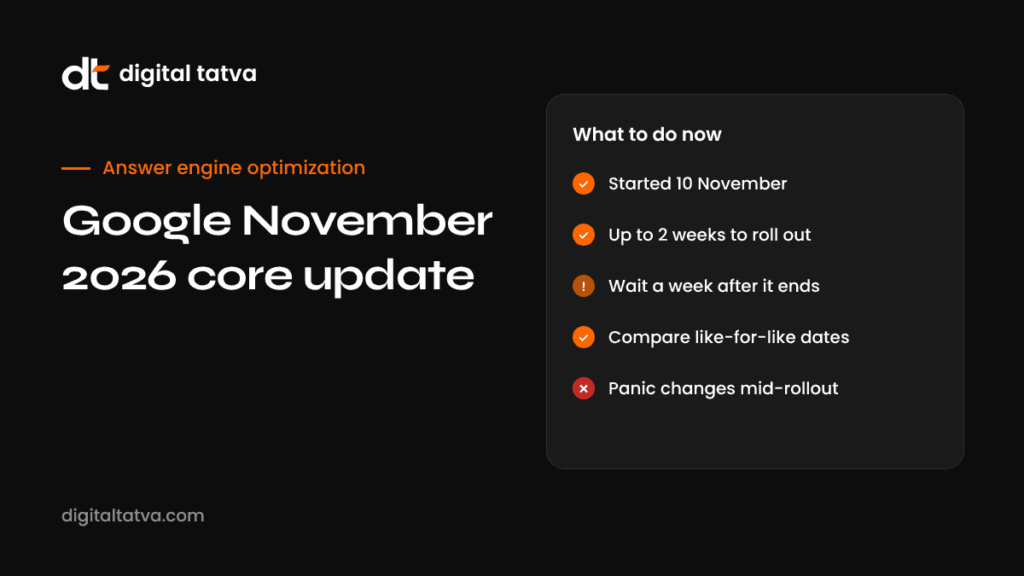
| 10 November | Google November 2026 core update begins | Rankings and AI citations may shift for up to two weeks |
| Around 24 November | Expected end of core update window | Rankings should settle before peak week |
| 26 November | Thanksgiving (US) | Largest forecast jump in AI referrals |
| 27 November | Black Friday | Peak shopping day |
| 30 November | Cyber Monday | Online peak, strong AI-assisted comparison |
| December | Gift shopping and last-order dates | Shoppers ask AI about delivery deadlines and returns |
The core update overlap is important. Read our guide to the Google November 2026 core update for how to read your data during peak season.
How shoppers are using AI this holiday season
Research from late 2026 shows that shoppers are comfortable letting AI help them choose, but much less comfortable letting it buy for them.
- McKinsey’s 2026 Agentic Commerce Consumer Survey found that more than 50% of consumers globally use AI for shopping, from about 37% in Japan to about 80% in China.
- YouGov’s 2026 Black Friday report for the UK found that 40% of shoppers would be comfortable using AI to find the best price, but only 7% would let it add items to their basket and 5% would let it complete a purchase.
- Visa research suggests consumers are not yet ready to let agents spend on their behalf without a trusted system around them.
The lesson for retailers is clear. AI decides who makes the shortlist. Your own website still has to win the sale. Holiday AEO is about getting onto the shortlist with accurate information, then making the click-through experience strong.
The AI shopping landscape in 2026
| Platform | What it does for shoppers | What it needs from you |
|---|---|---|
| ChatGPT | Product research, comparisons, gift ideas with links to retailers | Crawlable product pages, clear specs and prices, strong reviews |
| Google AI Mode and AI Overviews | AI shopping answers, Universal Cart across retailers (US, from October 2026) | Merchant Center feed, product schema, ranking pages |
| Gemini app | Shopping research and Universal Cart | Merchant Center data and clear product information |
| Bing AI Mode and Copilot | AI answers with citations | Bing indexing, fresh content, structured pages |
| Meta Muse | Personal agent that finds deals, tracks prices and handles returns (from September 2026) | Accurate offers and policies |
| Amazon Alexa for Shopping | Combines Rufus and Alexa+, including Buy for Me on outside products (from May 2026) | Strong Amazon listings and clear off-Amazon product pages |
| Perplexity | Product research with sources | Cited reviews and detailed product pages |
Not every platform completes purchases. ChatGPT’s Instant Checkout was rolled back, but shoppers still use ChatGPT to find and compare products, then buy on retailer sites. Some retailers, including eBay and Amazon, have also restricted third-party shopping agents. For more on agent checkout, see our guides to Google UCP and agentic checkout and Meta Muse.
The two-week holiday AEO checklist
With Black Friday on 27 November, there is not enough time for large content programmes. These are the changes most likely to help in the time available, ordered by impact.
1. Fix product data first
AI assistants recommend what they can understand. For every product you want to sell this season, check:
- A clear, descriptive title that says what the product is.
- Correct price, sale price and sale dates.
- Accurate stock status, updated as stock changes.
- Key specifications in text, not only in images.
- Good images with descriptive alt text.
Then make sure the same data is in your Google Merchant Center feed and your product schema. Mismatches between feed, schema and page are a common reason products are left out.
2. Add or validate product schema
Use Product and Offer schema with price, availability, priceValidUntil for sales, shipping details and return policy. Add AggregateRating only where you have genuine reviews. Validate everything with Google’s Rich Results Test.
3. Publish clear offer pages
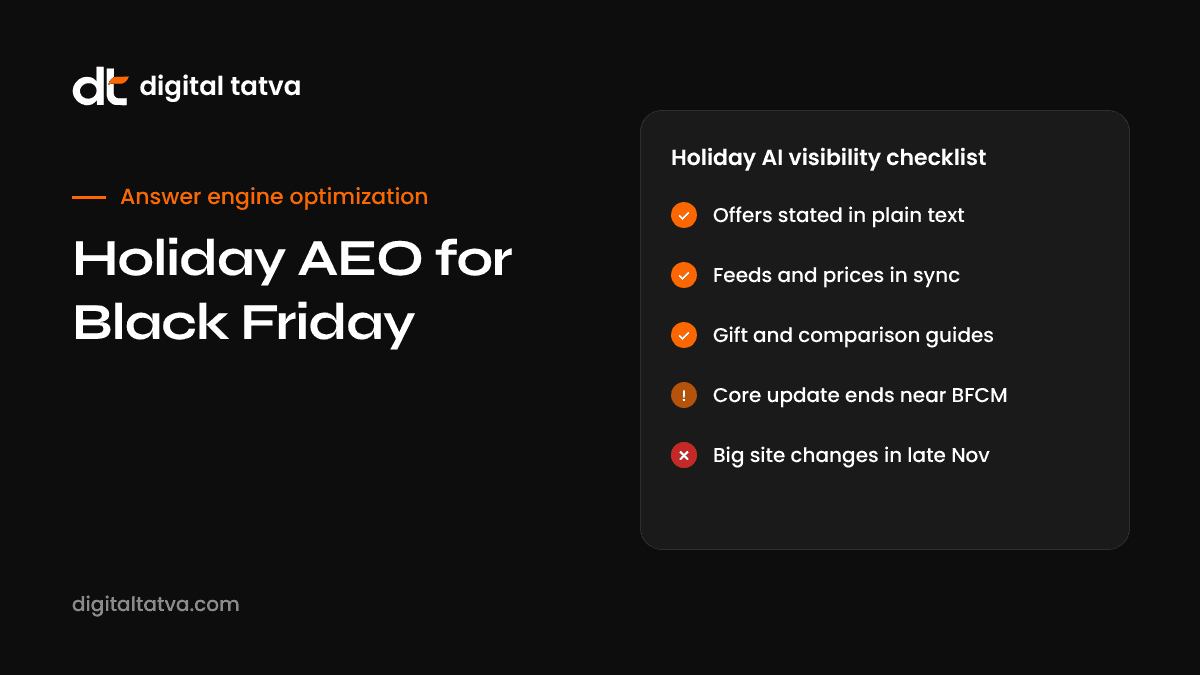
Create a Black Friday page that lists your real offers in plain text: product, normal price, sale price, dates and any conditions. AI assistants answering “best Black Friday deals on X” need this information in a form they can read and quote. Avoid hiding offers behind pop-ups, countdown scripts or images.
4. Build gift guide and comparison pages
Holiday prompts are often about people and budgets: “gifts for dad under $50”, “best tablet for a teenager”. Gift guides organised by recipient, budget and interest match these questions directly. Comparison pages help with “X vs Y” questions. Start each section with a direct answer, then explain. Our answer-first content guide shows the format.
5. Make policies easy to find and quote
Shoppers ask AI about delivery dates, last order dates, returns and gift receipts. Put these on clear pages with headings such as “Christmas delivery deadlines” and “Holiday returns policy”, with specific dates and conditions.
6. Check AI crawler access
Make sure your robots.txt and firewall allow the crawlers that power AI shopping answers, including Googlebot, Bingbot and OAI-SearchBot. Peak-season bot protection sometimes blocks them by accident. Our AI crawlers list explains which to allow.
7. Strengthen reviews
AI assistants lean heavily on reviews when recommending products. Ask recent customers for honest reviews, respond to existing ones and keep your presence on major review platforms current. See review sites for AEO.
8. Set up tracking before peak week
Create an AI traffic segment in GA4 covering chatgpt.com, gemini.google.com, perplexity.ai, copilot.microsoft.com and similar sources, and check that conversions are recorded correctly. Without this, you will not know what AI contributed after the season. Our guide on tracking AI traffic in GA4 walks through it.
9. Test your top prompts
Ask ChatGPT, Google AI Mode, Gemini and Copilot 10 to 20 holiday questions your customers would ask. Note whether you appear, what is said and which sources are cited. Fix factual errors on your own pages first, because those are the fastest to correct.
Quick wins by business type
| Business | Top priority | Second priority |
|---|---|---|
| Ecommerce brand | Product data, schema and Merchant Center feed | Gift guides and comparison pages |
| Marketplace seller | Listing titles, specs and reviews on each marketplace | A brand site with clear product pages |
| Local retailer | Google Business Profile hours, holiday hours and products | Local gift guide and stock information |
| Service business with holiday offers | Clear offer page with dates and terms | FAQ answering common booking questions |
| Travel and experiences | Availability, pricing and cancellation terms | Destination and gift voucher guides |
Common mistakes to avoid
- Prices in images only. AI systems may not read prices inside banners. Always state prices in text.
- Expired offers left live. Old deals shown in AI answers frustrate shoppers and can harm trust. Use clear dates and remove expired offers promptly.
- Blocking crawlers during peak. Aggressive bot protection can lock out legitimate AI and search crawlers.
- Thin category pages. A grid of products with no explanation gives AI nothing to quote.
- Inconsistent data. Different prices on the feed, the page and a marketplace confuse AI systems.
- Fake urgency and invented reviews. These break platform rules and damage trust with shoppers and AI systems alike.
Paid options in AI search
Organic visibility in AI answers cannot be bought, but some paid formats now appear around them. Google expanded ads in AI Mode to more countries in October 2026, and ChatGPT has its own ad formats. If you plan to use paid options this season, read our guides to ads in AI Mode and AI Overviews and ChatGPT ads. Paid and organic work best together: ads add reach, while accurate data and good content decide whether AI recommends you organically.
After the holidays
Holiday AEO does not end on Cyber Monday. In December and January:
- Review AI-referred traffic, conversions and revenue against previous periods.
- Compare which products AI assistants recommended with what actually sold.
- Fix data and content gaps you discovered.
- Turn successful gift guides into evergreen buying guides.
- Plan a full AEO programme for next year. Our AEO for ecommerce guide and agent-ready website guide are good starting points.
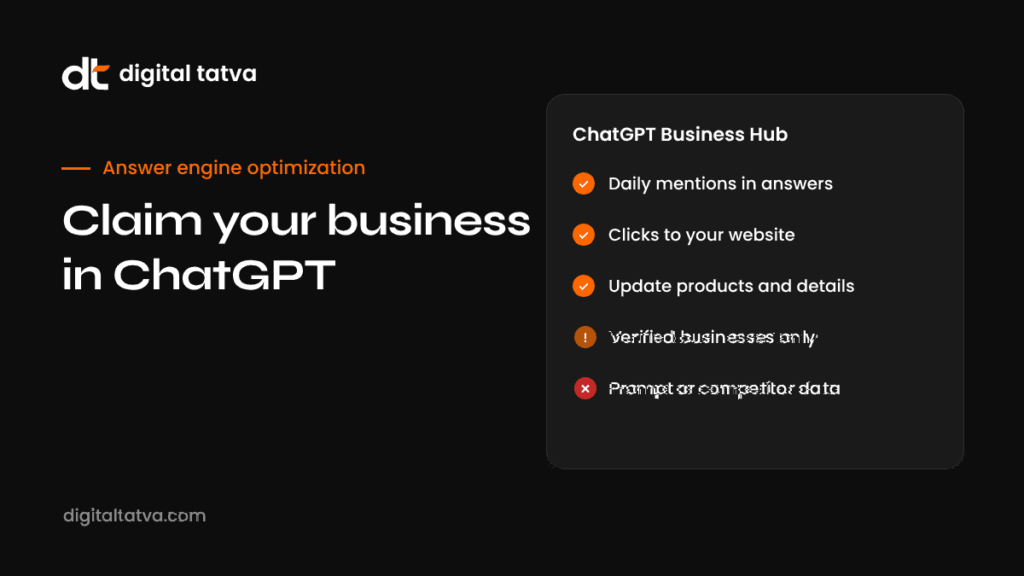
Also keep an eye on the reported ChatGPT Business Hub, which may let Shopify merchants manage products and see ChatGPT mentions and clicks directly.
How Digital Tatva can help
We help ecommerce and service businesses get their products and offers ready for AI shopping assistants. That includes product data and schema audits, crawler access checks, offer and gift guide pages built in an answer-first format, AI traffic tracking in GA4 and prompt testing across ChatGPT, Google AI Mode, Gemini and Copilot. We cannot guarantee that any AI assistant will recommend your products, and no one honestly can, but we can make sure your information is accurate, accessible and easy to recommend.
Want a fast holiday AI visibility check? Request an AEO audit for a prioritised list of fixes before Black Friday, or run our free AI visibility checker to test AI crawler access in a minute.
Frequently asked questions
What is holiday AEO?
Holiday AEO is answer engine optimization focused on the shopping season. It prepares products, offers and policies so AI assistants can find, understand and recommend them when shoppers ask for deals and gift ideas.
Is it too late to do AEO before Black Friday 2026?
No. Large content projects may not have time to take effect, but fixing product data, schema, offer pages, policies and crawler access can help within days, especially for AI answers that search the web live.
How much holiday traffic comes from AI assistants?
It is still smaller than search traffic but growing fast. Adobe forecasts AI-referred traffic to US retail sites will rise about 130% in the 2026 holiday season, including 95% on Black Friday.
Do AI-referred shoppers convert well?
In the 2025 holiday season, Adobe found AI-referred visitors converted 31% better than other sources overall, and 38% better on Black Friday.
Can AI assistants buy products for shoppers?
Some platforms are testing agent checkout, such as Google’s Universal Cart in the US. Most shoppers still prefer to complete purchases themselves, and some retailers restrict third-party shopping agents.
Which AI assistants should retailers focus on?
ChatGPT and Google’s AI Mode and AI Overviews are the biggest for most markets. Gemini, Copilot and Perplexity also matter. The same core work, accurate data and clear content, helps across all of them.
How do I track AI shopping traffic?
Create a segment in GA4 for AI referral sources such as chatgpt.com, gemini.google.com, perplexity.ai and copilot.microsoft.com, and check that conversions are recorded.
Can Digital Tatva help my store before Black Friday?
Yes. We offer a fast holiday AI visibility review covering product data, schema, crawler access, offer pages and tracking, with fixes prioritised by impact.
Product details, prices and features are checked at the time of writing and can change. Sources are linked in the text so you can check them yourself.
How does your brand appear in AI answers?
We test the questions your buyers ask across the major AI assistants and search engines, then show you what to fix first.
Get an AI Visibility Audit