15 Best AI Citation Tracking Tools to Monitor ChatGPT and Perplexity
Compare the 15 best AI citation tracking tools for ChatGPT and Perplexity, ranked by authority, with features, pricing, pros, cons, real citation data and a final verdict.
On this page
- Key takeaways
- What is AI citation tracking?
- Why you need a tool: what the research says about AI citations
- The 15 best AI citation tracking tools at a glance
- Our featured picks
- The 15 best AI citation tracking tools, reviewed
- How we chose these tools
- How to choose the right citation tracking tool
- How to set up AI citation tracking in 7 steps
- How to check ChatGPT and Perplexity citations for free
- How to turn citation data into more AI citations
- AI citation tracking in 2027: what to plan for
- Final verdict
- Related guides
- Frequently asked questions
Quick answer: The best AI citation tracking tools show not just whether ChatGPT and Perplexity mention your brand, but which pages and domains they cite as sources. For most marketing teams, Peec AI is the best all-round pick (from $95 a month, daily tracking, unlimited seats). Otterly.AI is the best budget option (from $29 a month, ChatGPT and Perplexity on every plan). Profound suits enterprises, Ahrefs Brand Radar is best for category-wide citation research, and LLMrefs and AthenaHQ let you start free. Because AI citations change daily, a tracker that checks the same prompts again and again is the only reliable way to know where you are cited.
Key takeaways
- A mention is when an AI names your brand. A citation is when it links to a page as a source. You need a tool that tracks both, because they move separately.
- AI citations are unstable. In an Ahrefs study of about 37,500 citations tracked for 20 days, 59% of ChatGPT’s cited sources were gone the next day, and only 4% were still cited after 20 days.
- Perplexity and ChatGPT cite very different sources. Ahrefs found 28.6% of Perplexity’s cited URLs ranked in Google’s top 10, against just 6 to 8% for ChatGPT, so you cannot track one engine and assume the other.
- Most AI citations for a brand come from third-party websites, not the brand’s own site. The best tools show you those sites so you can earn a place on them.
- We only included popular, well-established tools. Every one covers ChatGPT, and thirteen of the fifteen track Perplexity on at least one plan (Writesonic only on Enterprise). Semrush and SE Visible do not list Perplexity, which we flag clearly.
- No tool can make an AI cite you. Trackers measure; content, reputation and technical work move the numbers.
What is AI citation tracking?
AI citation tracking means checking, on a schedule, which web pages AI assistants such as ChatGPT and Perplexity link to as sources when they answer questions in your market. A citation tracking tool sends the same set of prompts to each AI engine every day or every week, saves the full answers, and records three things: whether your brand is mentioned, whether your website is cited, and which other domains and pages are cited instead of you.
That last point is where the value is. When you can see that ChatGPT keeps citing one review site, two Reddit threads and a competitor’s comparison page for “best accounting software for freelancers”, you know exactly where your brand needs to appear. That is the core of AI search visibility work.
| Brand mention | Citation | |
|---|---|---|
| What it is | The AI names your brand in its answer text | The AI links to a page as a source for its answer |
| Example | “Popular options include Brand X and Brand Y.” | A numbered source or link pill pointing to brandx.com/pricing |
| Why it matters | Shapes what buyers think of you | Sends clicks, and shows which pages AI trusts |
| How it can mislead | You can be mentioned without being cited | Your page can be cited while a competitor is recommended |
Ahrefs found the gap is large: for 54% of the websites ChatGPT cited, the brand behind the site was not named in the answer at all. On Google AI Mode that figure was 84%. So a mention tracker alone misses most of the picture, and a citation tracker alone misses what the buyer actually reads.
Why you need a tool: what the research says about AI citations
The case for automated citation tracking comes from independent research. Every figure below names its source. Some studies come from companies that sell AI visibility tools, which we point out.
1. Citations change almost every day
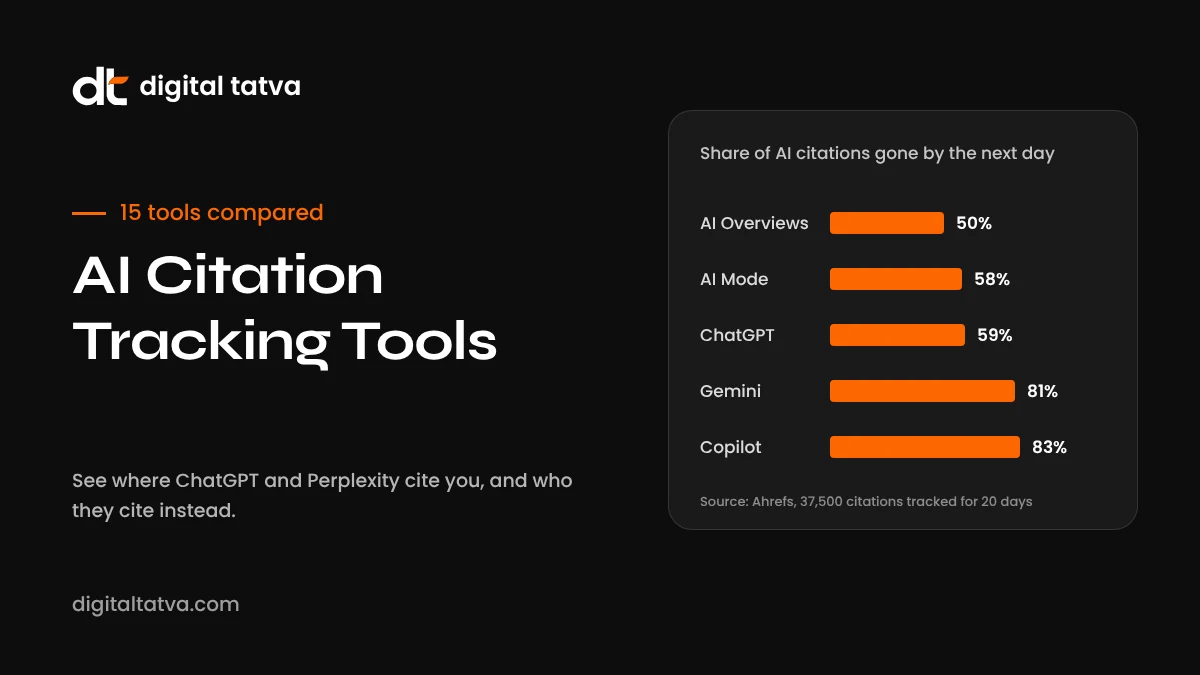
Ahrefs followed about 37,500 citations daily for 20 days across five AI tools (study published in late October). The share of cited sources that disappeared by the next day was:
| AI tool | Citations gone next day | Still cited after 20 days |
|---|---|---|
| Google AI Overviews | 50% | 6.6% |
| Google AI Mode | 58% | 6.8% |
| ChatGPT | 59% | 4.0% |
| Gemini | 81% | 0.2% |
| Microsoft Copilot | 83% | 0.5% |
The same study found that about 75% of citations that dropped out came back within the 20 days, and about half returned within three days. In other words, a single manual check tells you almost nothing. You need repeated checks to see your true citation rate, which is exactly what tracking tools automate. Ahrefs sells its own tracker, Brand Radar, which is on this list.
2. ChatGPT and Perplexity cite very different sources
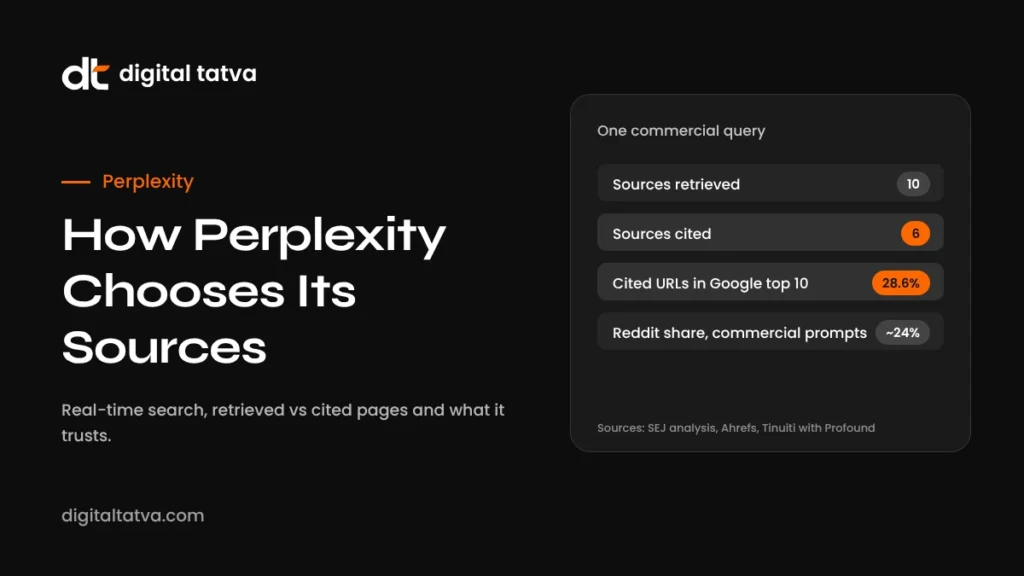
In an Ahrefs test of 15,000 long-tail queries (August 2025), 28.6% of the URLs Perplexity cited ranked in Google’s top 10, compared with only 6 to 8% for ChatGPT. Perplexity behaves much more like a search engine; ChatGPT draws on a wider and less predictable set of pages. Research by Tinuiti with Profound found Reddit made up about 24% of Perplexity’s citations for commercial prompts in January, against just 0.1% of Gemini’s. If you only track one engine, you will optimise for the wrong sources on the other.
3. Most of your citations come from other people’s websites
Ahrefs’ own guide to its Cited Domains report notes that most AI citations for a brand come from third-party websites. Profound’s analysis of 30 million citations (August 2024 to June 2025) found Wikipedia, Reddit, review sites and publishers dominate. A good tracker lists those domains so you can plan PR, reviews and community work around them. Our ChatGPT vs Gemini vs Perplexity citation study covers these patterns in depth.
4. AI engines get citations wrong
The Tow Center for Digital Journalism at Columbia tested eight AI search tools with 1,600 queries (March 2025) and found that together they answered more than 60% of source queries incorrectly. Perplexity had the lowest error rate at 37%. A study by the European Broadcasting Union and the BBC (October 2025) of more than 3,000 answers in 18 countries found 45% had at least one significant issue and 31% had serious sourcing problems. Tracking tools let you see the exact answer and link behind every result, so you can catch wrong or outdated claims about your brand.
5. Google rankings help, but do not guarantee citations
In the Ahrefs stability study, pages that ranked in Google were far more likely to stay cited for a week or more (29% against 4% on AI Overviews, 11% against 4% on ChatGPT). Yet about 75% of pages cited by ChatGPT and AI Mode did not rank in Google for the same question. Your SEO rank tracker cannot show you AI citations; you need a separate tool.
The 15 best AI citation tracking tools at a glance
The tools are ranked by authority, measured by the Ahrefs Domain Rating (DR) of each vendor’s website, checked in late November. DR scores a website from 0 to 100 by the strength of its backlink profile, so it is a fair proxy for how established and widely referenced a vendor is. Where two tools tie, the one with the larger product footprint comes first. Authority is not the same as fit: use the featured picks and the verdict below to choose.
| Tool | Authority (DR) | Best for | Starting price | Free plan or trial | Tracks Perplexity |
|---|---|---|---|---|---|
| 1. Semrush AI Visibility Toolkit | 92 | Teams already on Semrush | $99 per month | No free trial | No |
| 2. Ahrefs Brand Radar | 91 | Category-wide citation research | Add-on from about $199 per month | Free AI visibility checker; no free trial stated | Yes |
| 3. Similarweb AI Brand Visibility | 89 | Citation data next to traffic and market intelligence | $129 per month | Free sign-up to explore | Yes |
| 4. SE Visible by SE Ranking | 86 | Analysing the sources AI cites | $89 per month | 14-day free trial | No |
| 5. Surfer AI Tracker | 85 | Content teams already using Surfer | From about $82 per month billed yearly | No free trial | Yes |
| 6. Writesonic GEO | 84 | Tracking and content creation together | $79 per month billed yearly | 7-day free trial on self-serve plans | Enterprise only |
| 7. BrightEdge AI Catalyst | 84 | Enterprises already on BrightEdge | Custom pricing | Demo | Yes |
| 8. Profound | 81 | Enterprises | Custom pricing | Free trial | Yes |
| 9. Peec AI | 79 | Most marketing teams | $95 per month | Free trial | Yes |
| 10. Otterly.AI | 79 | Small budgets | $29 per month | Free trial | Yes |
| 11. Scrunch AI | 74 | B2B brands with several buyer types | $300 per month | 7-day free trial, no card | Yes |
| 12. AthenaHQ | 73 | A free baseline | Free tier; Starter $295 per month | Free tier with 300 credits | Yes |
| 13. Promptwatch | 71 | Citations plus AI crawler logs | $95 per month | Free trial | Yes |
| 14. ZipTie | 71 | SEO teams that live in Google Search Console | Configurable pricing | 14-day free trial | Yes |
| 15. LLMrefs | 68 | A free start with wide engine coverage | Free tier; Pro $79 per month | Free tier and 7-day free trial | Yes |
Prices were checked on each vendor’s site or recent reviews in late November and change often, so confirm the current price before you buy. For a full cost breakdown, see our AI visibility tools pricing guide.
Our featured picks
| Need | Featured pick | Why |
|---|---|---|
| Best overall | Peec AI | Daily data, clear citation views and unlimited seats at a published price |
| Best budget | Otterly.AI | ChatGPT and Perplexity citations from $29 a month |
| Best for enterprises | Profound | Widest engine list, accuracy checks and crawler analytics |
| Best for citation research | Ahrefs Brand Radar | Cited pages and citation gaps across a whole market |
| Best free start | LLMrefs | Free tier and ten engines |
| Best for technical teams | Promptwatch | Links citations to AI crawler logs |
| Best for source gap analysis | SE Visible by SE Ranking | Ranks sources that cite competitors but not you |
| Best for B2B brands | Scrunch AI | Shows how citations change by buyer persona |
The 15 best AI citation tracking tools, reviewed

1. Semrush AI Visibility Toolkit: Best for teams already on Semrush
- Authority (Ahrefs DR): 92
- Starting price: $99 per month (25 tracked prompts; 50 more for $60 a month)
- Free plan or trial: No free trial
- AI engines: Prompt tracking for ChatGPT and Google AI Mode; Perplexity is not listed for prompt tracking
The Semrush AI Visibility Toolkit adds AI tracking to the SEO platform many teams already use. Its competitor research finds prompts and topics where competitors are cited but your brand is not, and prompt tracking monitors ChatGPT and Google AI Mode. We include it because so many readers use Semrush, but note that Semrush does not list Perplexity for prompt tracking.
Key features:
- Competitor research: prompts where rivals are cited and you are not
- Prompt tracking in ChatGPT and Google AI Mode
- Brand performance and visibility overview
- Prompt research with large daily limits
- AI search site audit
Pros:
- Works inside an SEO suite you may already pay for
- Strong competitor gap research
- Easy to add for existing users
Cons:
- Perplexity not listed for prompt tracking
- Only 25 tracked prompts in the base plan
- Each extra user needs its own licence
Verdict: Worth adding if you already live in Semrush, but pair it with a tool that tracks Perplexity.
2. Ahrefs Brand Radar: Best for category-wide citation research
- Authority (Ahrefs DR): 91
- Starting price: Add-on from about $199 per month (varies by region; needs an Ahrefs plan)
- Free plan or trial: Free AI visibility checker; no free trial stated
- AI engines: ChatGPT, Perplexity, Gemini, Copilot, Google AI Overviews and AI Mode
Brand Radar is built on Ahrefs’ large database of prompts and AI answers, so you can see who gets cited across a whole market rather than only for your own prompt list. Its Cited Domains and Cited Pages reports show the sites and pages AI chatbots cite when they mention a brand, and you can filter for pages that cite competitors but not you, which turns into a ready-made outreach list.
Key features:
- Cited Domains and Cited Pages reports for any brand
- Citation gap filter: pages that cite competitors but not you
- Find the subreddits and forums AI cites in your niche
- Mentions, share of voice and impressions across engines
- Works alongside Ahrefs backlink and keyword data
Pros:
- Huge dataset for market and competitor research
- Excellent for finding citation gaps and outreach targets
- Fits teams already using Ahrefs
Cons:
- Paid add-on on top of an Ahrefs subscription
- Built around Ahrefs’ prompt database rather than only your own prompts
- Can be overwhelming for beginners
Verdict: The best tool for researching who AI cites across your whole category.

3. Similarweb AI Brand Visibility: Best for citation data next to traffic and market intelligence
- Authority (Ahrefs DR): 89
- Starting price: $129 per month ($99 billed yearly)
- Free plan or trial: Free sign-up to explore
- AI engines: ChatGPT, Gemini, Perplexity and other AI engines
Similarweb, best known for website traffic and market intelligence, now tracks how AI engines mention and cite brands. Its Citation Analysis view lists the domains and URLs that generative engines cite when they mention your brand, grouped by source type such as publishers, reviews and user content, marketplaces, social and competitors, and gives each source an influence score so you know which ones matter most.
Key features:
- Visibility share: the percentage of AI answers that cite your site
- Citation Analysis by source type with an influence score per source
- Cited URLs table ranked by influence, filterable by topic and domain
- Prompt analysis showing which prompts trigger mentions or citations
- Competitor benchmarking against the top brands in each topic
Pros:
- Influence scores help you prioritise sources
- Sits next to trusted traffic and market data
- Clear grouping of cited sources by type
Cons:
- Full engine list is not published
- Best value if you already use Similarweb
- Advanced data sits in higher tiers
Verdict: A strong choice for teams that want AI citations alongside traffic and competitor intelligence.

4. SE Visible by SE Ranking: Best for analysing the sources AI cites
- Authority (Ahrefs DR): 86
- Starting price: $89 per month ($71 billed yearly), 75 prompts tracked daily
- Free plan or trial: 14-day free trial
- AI engines: ChatGPT, Gemini, Copilot, Google AI Mode and AI Overviews; Claude on Agency; Perplexity not listed
SE Visible is the dedicated AI visibility product from SE Ranking. Its AI Sources Analysis shows the domains and pages AI cites in your market and how often, with a gap score that ranks sources citing your competitors but not you. You can filter cited pages by content type, such as listicles, comparison pages and how-to guides, and export the list as an outreach or content plan. Core costs $189 a month for 200 prompts and Agency $399 for 1,000.
Key features:
- AI Sources Analysis at domain and page level
- Gap score for sources that cite competitors but not you
- Filters by content type and by whether your brand is mentioned
- SEO data such as traffic and backlinks for cited sources
- Daily tracking with exports for outreach plans
Pros:
- One of the deepest source analysis tools available
- Daily tracking at a published price
- Turns citation gaps into an action list
Cons:
- Perplexity is not listed among tracked engines
- Claude only on the Agency plan
- Pair with a Perplexity tracker if that engine matters to you
Verdict: The best tool for working out exactly which sources to target next, ideally paired with a Perplexity tracker.

5. Surfer AI Tracker: Best for content teams already using Surfer
- Authority (Ahrefs DR): 85
- Starting price: From about $82 per month billed yearly (25 prompts on Standard)
- Free plan or trial: No free trial
- AI engines: ChatGPT on Standard; Gemini, Perplexity and Google AI Overviews on higher plans
Surfer, the content optimisation platform, includes an AI Tracker that monitors how your brand appears in AI answers. Its Sources metric lists the web pages AI engines reference most for your prompts, and you can see which domains each prompt cites, so content teams can spot the pages to beat and then improve their own in Surfer’s editor. Extra prompts cost $18 a month per pack of 10.
Key features:
- Sources metric showing the pages AI references most
- Cited domains for each tracked prompt
- Brand visibility tracking across AI engines
- Works next to Surfer’s content editor and audit
- Standalone AI Search Analytics plan available
Pros:
- Connects citation gaps directly to content work
- Familiar for existing Surfer users
- Clear view of the most referenced pages
Cons:
- Standard plan tracks ChatGPT only
- Perplexity needs a higher plan
- No free trial
Verdict: The natural pick for content teams that already write and optimise in Surfer.
6. Writesonic GEO: Best for tracking and content creation together
- Authority (Ahrefs DR): 84
- Starting price: $79 per month billed yearly (Starter: 50 prompts)
- Free plan or trial: 7-day free trial on self-serve plans
- AI engines: ChatGPT, Gemini and Google AI Overviews on self-serve plans; Perplexity, Claude, Grok, AI Mode, Copilot and more on Enterprise
Writesonic combines AI visibility tracking with its AI writing tools, so teams can find gaps and create content in one place. Self-serve plans track ChatGPT, Gemini and AI Overviews, while Enterprise covers ten engines including Perplexity and adds citation features such as Fact Check, Citation Decay and Social Citations for YouTube, LinkedIn and Reddit. Basic costs $199 a month and Growth $399 a month, billed yearly.
Key features:
- AI visibility tracking with daily answers
- Citation Decay and Social Citations on Enterprise
- Fact Check for wrong claims about your brand
- Action Center that turns gaps into content tasks
- Built-in AI writing tools
Pros:
- Tracking and content creation in one tool
- Strong citation features on Enterprise
- Low entry price on yearly billing
Cons:
- Perplexity only on Enterprise
- Self-serve plans list no citation analysis features
- Best features need the custom plan
Verdict: A good fit for content-led teams; choose Enterprise if Perplexity citations matter.

7. BrightEdge AI Catalyst: Best for enterprises already on BrightEdge
- Authority (Ahrefs DR): 84
- Starting price: Custom pricing
- Free plan or trial: Demo
- AI engines: ChatGPT, Perplexity, Gemini, Google AI Overviews, AI Mode and other AI platforms
BrightEdge, a long-established enterprise SEO platform, offers AI Catalyst for tracking AI search. It splits results into Mentions Presence and Citations Presence, shows which page is cited for each question and how it compares with yours on citations, rankings and traffic, and reveals which publications, social platforms and contributors earn citations on your topics.
Key features:
- Separate Mentions Presence and Citations Presence trends
- Cited page for each question, compared with yours
- Publications, social platforms and contributors that earn citations
- Sentiment of AI answers about you and competitors
- Alerts when a competitor takes over an answer
Pros:
- Separates mentions from citations clearly
- Covers ChatGPT, Perplexity and Google AI
- Fits large enterprise SEO workflows
Cons:
- Pricing only through sales
- Built for large teams
- Best value inside the wider BrightEdge platform
Verdict: The right choice for enterprise teams that already run SEO in BrightEdge.

8. Profound: Best for enterprises
- Authority (Ahrefs DR): 81
- Starting price: Custom pricing (free trial offered; earlier self-serve plans were about $99 and $399 a month)
- Free plan or trial: Free trial
- AI engines: Up to ten engines, including ChatGPT, Perplexity, Gemini, Claude, Copilot, Grok, Meta AI, DeepSeek and Google AI Overviews
Profound is one of the best-known enterprise AI visibility platforms, used by large brands with big prompt sets across many markets. Its Answer Engine Insights module shows visibility, share of voice and citations by platform, prompt, region and persona. FactCheck traces inaccurate AI claims back to the citations behind them, and Agent Analytics shows how AI crawlers read your site through server log forwarding.
Key features:
- Citation views by platform, region, prompt and persona
- FactCheck links wrong claims to the sources that caused them
- Agent Analytics for AI crawler activity on your site
- Prompt Volumes to estimate how often prompts are asked
- Product-level citations in ChatGPT shopping answers
Pros:
- One of the widest engine lists available
- Deep enterprise features, API and unlimited seats
- Connects citations to accuracy and crawler data
Cons:
- Pricing is not public for brands
- More than small teams need
- Takes time to set up and learn
Verdict: The benchmark citation platform for large, multi-market brands with an enterprise budget. Read our full Profound review.

9. Peec AI: Best for most marketing teams
- Authority (Ahrefs DR): 79
- Starting price: $95 per month (Starter: 50 prompts, 3 models, daily)
- Free plan or trial: Free trial
- AI engines: Choose 3 from ChatGPT, Perplexity, AI Overviews, AI Mode, Gemini and others; extra models from $30 a month
Peec AI is a self-serve AI visibility tracker built for marketing teams. It runs your prompts every day on the AI models you choose and reports visibility, position, sentiment and sources. Its sources view separates brand mentions from citations and shows exactly which domains and URLs each model relies on, which makes it one of the clearest citation tools for non-specialists. Higher plans add more prompts, countries and projects: Pro is $245 a month for 150 prompts and Advanced $495 for 350, with 15% off on yearly billing.
Key features:
- Sources report that lists cited domains and URLs, separate from mentions
- Daily tracking on every plan, with up to 4,500 AI answers a month on Starter
- Competitor benchmarking for visibility, position and sentiment
- Fact-checked prompts that compare AI claims with your own facts
- Unlimited team seats; API on Pro and above, Looker Studio on Advanced
Pros:
- Daily data at a published price
- Unlimited seats, so the whole team can use it
- Very clear source and citation views
Cons:
- Only three AI models on standard plans
- Extra models and countries raise the cost
- Starter is limited to one country
Verdict: The best all-round citation tracker for most in-house teams. Read our full Peec AI review.

10. Otterly.AI: Best for small budgets
- Authority (Ahrefs DR): 79
- Starting price: $29 per month (Lite: 15 prompts)
- Free plan or trial: Free trial
- AI engines: ChatGPT, Perplexity, Google AI Overviews and Copilot; AI Mode and Gemini as add-ons
Otterly.AI is one of the simplest and cheapest ways to track where ChatGPT and Perplexity cite you. Every plan covers ChatGPT, Perplexity, Google AI Overviews and Microsoft Copilot. Its Domain Citations and link citation reports show which domains and URLs AI engines cite for your prompts, grouped by source type, so you can see at a glance whether answers lean on forums, publishers, review sites or brand websites. Standard costs $189 a month for 100 prompts and Premium $489 for 400.
Key features:
- Domain and URL citation reports grouped by source type
- Brand mention and ranking tracking across four engines
- GEO audit that checks your pages for AI readiness
- Competitor share of voice
- Simple setup with prompt suggestions
Pros:
- One of the lowest entry prices available
- ChatGPT and Perplexity included on every plan
- Easy for beginners and small teams
Cons:
- 15 prompts on Lite is small for most brands
- Gemini and AI Mode cost extra
- Less depth than enterprise platforms
Verdict: The best starting point for small businesses that want real citation data on a tight budget. Read our full Otterly.AI review.

11. Scrunch AI: Best for B2B brands with several buyer types
- Authority (Ahrefs DR): 74
- Starting price: $300 per month ($250 billed yearly)
- Free plan or trial: 7-day free trial, no card
- AI engines: ChatGPT, Perplexity, Claude, Gemini, Meta AI, Google AI Mode and AI Overviews
Scrunch AI tracks how AI answers and their sources change for different buyer personas, for example a CFO compared with an IT manager. Starter includes 350 custom prompts plus 1,000 industry prompts, page audits and three users, which gives mid-sized B2B teams a wide view of where they are cited.
Key features:
- Persona-based prompt tracking
- Citation and source analysis per persona and engine
- 350 custom prompts plus 1,000 industry prompts
- Page audits for AI readability
- Competitor benchmarking
Pros:
- Shows how citations differ by buyer type
- Large prompt allowance
- Trial without a card
Cons:
- Higher entry price than self-serve trackers
- Persona set-up takes thought
- Three users on Starter
Verdict: The best choice for B2B brands whose buyers ask very different questions.

12. AthenaHQ: Best for a free baseline
- Authority (Ahrefs DR): 73
- Starting price: Free tier; Starter $295 per month (3,600 credits)
- Free plan or trial: Free tier with 300 credits
- AI engines: Five models on the free tier, more on paid plans, including ChatGPT and Perplexity
AthenaHQ uses credits, where one credit equals one AI response, which makes costs easy to estimate. The free tier lets you measure a baseline across five models, including the sources AI uses, and it flags inaccurate claims AI makes about your brand.
Key features:
- Credit-based tracking: one credit per AI answer
- Source and citation insights for tracked prompts
- Flags inaccurate claims about your brand
- Competitor comparison
- Free tier across five models
Pros:
- Real free tier, not just a trial
- Predictable credit pricing
- Accuracy checks alongside citations
Cons:
- Big jump from free to $295 a month
- Credits run out fast with daily checks
- Free tier is too small for ongoing tracking
Verdict: The best way to measure where you stand before you pay for anything.

13. Promptwatch: Best for citations plus AI crawler logs
- Authority (Ahrefs DR): 71
- Starting price: $95 per month (Essential: 50 prompts)
- Free plan or trial: Free trial
- AI engines: ChatGPT, Perplexity, Gemini, Claude, DeepSeek, Grok, Copilot and Google AI Overviews
Promptwatch combines AI visibility tracking with crawler logs, so you can see both where AI cites you and whether AI bots can actually read your pages. Its citation analytics include snippets that show what each cited page contributed to an answer, and its content agents can draft pages from citation gaps and publish to WordPress, Webflow or Framer.
Key features:
- Citation analytics with snippets showing what each page contributed
- AI crawler logs showing which bots visit which pages
- Agent health checks for pages AI cannot reach or read
- Content gap analysis and content agents
- Publishing to WordPress, Webflow and Framer
Pros:
- Links citation data to technical crawl data
- Turns citation gaps into content tasks
- Wide engine coverage
Cons:
- Crawler logs need some technical setup
- More features than a simple tracker needs
- Prompt limits on the entry plan
Verdict: A strong pick for technical and content teams that want to fix the causes of missing citations.

14. ZipTie: Best for SEO teams that live in Google Search Console
- Authority (Ahrefs DR): 71
- Starting price: Configurable pricing
- Free plan or trial: 14-day free trial
- AI engines: ChatGPT, Perplexity and Google AI Overviews
ZipTie was launched by the team behind the SEO agency Onely. It gives each query an AI Success Score based on mentions, citations and sentiment, and can generate queries from a URL or import them from Google Search Console, which ties AI citation tracking to the queries that already bring you traffic.
Key features:
- AI Success Score combining mentions, citations and sentiment
- Query import from Google Search Console
- Queries generated from any URL
- Competitor share of voice
- Tracks ChatGPT, Perplexity and AI Overviews
Pros:
- Connects AI citations to real search queries
- Clear scoring to prioritise work
- Focused on the engines that matter most
Cons:
- Only three engines
- Pricing needs configuring
- No Gemini or Claude tracking
Verdict: A smart pick for SEO teams that want AI citations next to their Search Console data.

15. LLMrefs: Best for a free start with wide engine coverage
- Authority (Ahrefs DR): 68
- Starting price: Free tier; Pro $79 per month (up to 500 prompts)
- Free plan or trial: Free tier and 7-day free trial
- AI engines: ChatGPT, Perplexity, Gemini, Claude, Copilot, Grok, DeepSeek, Meta AI, AI Overviews and AI Mode
LLMrefs tracks how often AI models cite your content and how you compare with competitors. You enter keywords, it generates prompts from them, and it reports an LLMrefs Score that summarises your visibility, alongside the actual AI snippets that reference your site. Pro covers up to 500 prompts with unlimited domains and team invites.
Key features:
- Shows the real AI answer snippets that reference your site
- LLMrefs Score to summarise visibility across engines
- Competitor gap analysis where rivals win citations
- Prompts generated from your keywords
- Ten engines, including Grok and DeepSeek
Pros:
- Genuine free tier to test before paying
- One of the widest engine lists at this price
- High prompt volume on Pro
Cons:
- Free tier is limited
- Mainly monitoring, with lighter guidance on what to fix
- Keyword-generated prompts may need editing to match real buyer questions
Verdict: The best free starting point if you want to watch many engines at once.
How we chose these tools
We started from the 51 tools in our AI visibility tools directory and kept only popular, well-established tools that do the job this guide is about: showing which sources AI engines cite, not only whether your brand is named. Smaller or newer tools with little market track record were left out. We then scored each one on five points:
- Citation depth: does it show cited domains and individual URLs, and can you compare them with competitors?
- ChatGPT and Perplexity coverage: both engines on the plan you would actually buy.
- Tracking frequency: daily or flexible checks, because citations change day to day.
- Transparent pricing: a published price or a clear trial.
- Action: features that help you act on the data, such as gap reports, outreach lists or content tools.
We then ordered the list by each vendor’s Ahrefs Domain Rating, so the most established and widely referenced tools come first.
No vendor paid to be included, and we do not use affiliate links. Digital Tatva is an AEO consultancy, so we use several of these tools in client work, but we have no commercial relationship with any of them.
How to choose the right citation tracking tool
| If you are… | Start with | Also consider |
|---|---|---|
| A small business or startup | Otterly.AI | LLMrefs free tier, AthenaHQ free tier |
| An in-house marketing team | Peec AI | Promptwatch, Similarweb AI Brand Visibility |
| An enterprise brand | Profound | Scrunch AI, BrightEdge AI Catalyst |
| An SEO team on Ahrefs or Semrush | Ahrefs Brand Radar | SE Visible or Semrush, plus a Perplexity tracker |
| Selling in several countries | Peec AI Pro (three countries) | Profound |
| A B2B company with many buyer types | Scrunch AI | Profound |
| On a zero budget | LLMrefs or AthenaHQ free tiers | ZipTie 14-day trial |
Ask these questions before you buy:
- Does the plan I can afford include both ChatGPT and Perplexity, or are they add-ons?
- Can I see the individual cited URLs, not just the domains?
- How often are prompts checked, and does daily tracking cost extra?
- How many prompts do I get, and how many do I really need? Most brands need 50 to 150 to cover their main topics.
- Can I export the data or connect it to Looker Studio for reporting?
- Does it track competitors’ citations as well as mine?
How to set up AI citation tracking in 7 steps
- List your buyer questions. Write 30 to 100 prompts the way real customers ask them: “best CRM for a five-person sales team”, “is Brand X worth it”, “Brand X vs Brand Y”. Mix unbranded, branded and comparison prompts.
- Choose your engines. Start with ChatGPT and Perplexity, then add Google AI Overviews, AI Mode and Gemini if Google traffic matters to you.
- Add three to five competitors so you can see who wins the citations you miss.
- Wait one to two weeks before drawing conclusions. Citations churn daily, so you need a baseline, not a snapshot.
- Sort cited domains into types: your site, competitor sites, review sites, publishers, forums such as Reddit, video, and reference sites such as Wikipedia.
- Build an action list: pages on your site to improve, third-party sites to get listed or reviewed on, and topics where nobody is cited well yet.
- Report monthly on citation rate, mention rate, share of voice and AI referral traffic. Our AEO reporting template and guide to tracking AI traffic in GA4 help here.
How to check ChatGPT and Perplexity citations for free
Before you pay for a tool, you can run a manual check:
- Open ChatGPT with search turned on and Perplexity, each in a private window and signed out where possible, so personal history does not affect the answer.
- Ask 10 of your most important buyer questions in each, one question per new chat.
- Save the answer text and click every source link. Note the domain, the exact page, and whether your brand is named.
- Repeat the same questions three times over a week. Because citations change daily, count how many times out of three each domain appears.
- Record everything in a spreadsheet with columns for date, engine, prompt, brands named and cited URLs.
This works for a quick baseline, but it does not scale beyond a handful of prompts. That is the point where a tracker pays for itself. You can also run our free AI visibility checker for a fast first look.
How to turn citation data into more AI citations
A tracker only tells you where you stand. These are the actions that tend to move citation numbers, based on the research above and our own client work:
- Make your pages easy to quote. Lead each page with a direct answer, use clear headings that match real questions, and keep facts such as prices, features and locations in plain text, not images.
- Let AI crawlers in. Allow OAI-SearchBot, ChatGPT-User and PerplexityBot in robots.txt, and make sure important content is not hidden behind scripts or logins.
- Earn a place on the sites AI already cites. Use your tool’s cited domains list to target review sites, directories, publishers and “best of” lists in your category.
- Take part in real discussions. Perplexity in particular cites Reddit and forums heavily. Helpful, honest answers from your team can become citations.
- Keep content fresh. Update statistics, prices and dates on key pages. Our guide to refreshing content for AEO explains how.
- Strengthen your Google rankings. Ranking pages were much more likely to stay cited in the Ahrefs study, and Perplexity overlaps heavily with Google’s top 10.
- Fix wrong facts at the source. When a tracker shows an AI repeating an outdated claim, find the cited page and get it corrected.
For a step-by-step plan for one engine, read how to get your brand in ChatGPT. If you would rather have experts do it, Digital Tatva’s AEO services cover citation audits, content, technical fixes and digital PR.
AI citation tracking in 2027: what to plan for
This is our view of where citation tracking is heading, based on how the tools and engines have changed over the past year. It is a forecast, not a promise.
- More engines, more markets. Tools already cover up to 26 models in some plans. Expect regional assistants and shopping assistants to become standard in 2027.
- From dashboards to agents. Several tools now draft content or outreach from citation gaps. In 2027 more of the fix will happen inside the tracker.
- Citations linked to revenue. Crawler logs and AI referral analytics are joining citation data, so teams can connect a citation to visits and leads.
- Accuracy becomes a core metric. With independent audits finding frequent sourcing errors, expect more brands to track whether AI cites them correctly, not just how often.
- Consolidation. With more than 50 tools on the market, expect mergers and closures. Favour vendors that let you export your history.
Final verdict
If you want one tool to track where ChatGPT and Perplexity cite you, start with Peec AI. It gives daily data, a clear sources report and unlimited seats at a published price, which suits most marketing teams. On a tight budget, Otterly.AI covers ChatGPT and Perplexity from $29 a month and is the easiest way to begin. Enterprises with many markets and big prompt sets should look at Profound, and SEO teams that want to study citations across a whole category will get the most from Ahrefs Brand Radar. If you are not ready to pay, use the LLMrefs or AthenaHQ free tiers to set a baseline first.
Whichever you choose, remember two things. First, citations change daily, so judge results over weeks, not single checks. Second, no tool can make an AI cite you. The tracker shows you where the gaps are; better content, a stronger reputation on the sites AI trusts and sound technical foundations close them.
Want more AI citations, not just more data? Digital Tatva helps brands get found, cited and described accurately by ChatGPT, Perplexity, Gemini and Google AI. Request an AEO audit and we will show you where you are cited today, who is cited instead of you, and what to fix first.
Related guides
- 10 best ChatGPT rank tracking tools
- 10 best Perplexity rank tracking tools
- Best Gemini visibility tracking tools
- Best Microsoft Copilot visibility tracking tools
- ChatGPT brand visibility report
Not sure what to track in these tools? Read keywords vs prompts: how to choose what to track for AI visibility.
Frequently asked questions
What is the best tool to track citations in ChatGPT and Perplexity?
For most teams, Peec AI is the best all-round choice: it tracks both engines daily, shows the exact domains and URLs they cite, and starts at $95 a month with unlimited seats. Otterly.AI is the best budget option from $29 a month, and Profound is the leading enterprise platform.
How can I see which websites ChatGPT cites for my industry?
Use a citation tracking tool such as Peec AI, Otterly.AI or Ahrefs Brand Radar. They run your industry prompts in ChatGPT on a schedule and list every cited domain and page. For a quick manual check, ask ChatGPT with search turned on and click each source link.
Is there a free AI citation tracker?
Yes. LLMrefs and AthenaHQ have free tiers, and Ahrefs offers a free AI visibility checker. They are limited in prompts or checks, but they are enough to set a baseline before you pay for a tool.
What is the difference between an AI mention and an AI citation?
A mention is when an AI names your brand in its answer. A citation is when it links to a page as a source. Ahrefs found that for 54% of the sites ChatGPT cited, the brand behind the site was not named in the answer, so you need to track both.
How do I know if Perplexity is citing my website?
Ask Perplexity the questions your customers ask and check the numbered sources under each answer. To track this over time, use a tool such as Otterly.AI, Peec AI, LLMrefs or Profound, which record Perplexity citations automatically.
Why does ChatGPT cite my competitor instead of me?
Usually because the competitor appears on more of the sources ChatGPT trusts, such as review sites, publishers, Reddit threads and comparison pages, or because their pages answer the question more directly. A citation tracker shows which sources are winning so you can close the gap.
How often do AI citations change?
Very often. In an Ahrefs study of about 37,500 citations, 59% of ChatGPT’s cited sources and 81% of Gemini’s were gone the next day, although about three quarters of dropped citations came back within 20 days.
How much does an AI citation tracking tool cost?
Self-serve tools range from about $29 to $300 a month. Otterly.AI starts at $29, LLMrefs Pro at $79, Peec AI at $95 and Scrunch AI at $300. Enterprise platforms such as Profound use custom pricing.
Can a tool get my brand cited by ChatGPT?
No. Tracking tools measure where you are cited. Getting cited depends on your content, your reputation on third-party sites and technical access for AI crawlers. Some tools suggest fixes, but none can guarantee a citation.
Which AI citation tracker is best for small businesses?
Otterly.AI is the best starting point for most small businesses, with ChatGPT and Perplexity on every plan from $29 a month. LLMrefs is a good alternative if you want to start on a free tier.
Which AI citation tracker is best for agencies?
Peec AI, Profound and Otterly.AI all suit agencies, with multiple projects or client workspaces, and our guide to AI visibility tools for agencies compares more options.
Do Semrush and Ahrefs track AI citations?
Yes. Ahrefs Brand Radar shows cited domains and cited pages across ChatGPT, Perplexity, Gemini, Copilot and Google AI. The Semrush AI Visibility Toolkit finds prompts where competitors are cited and tracks ChatGPT and Google AI Mode, but does not list Perplexity for prompt tracking.
How many prompts should I track for AI citations?
Most brands need 50 to 150 prompts to cover their main products, comparisons and buyer questions. Start with 30 to 50 of your most valuable questions and expand once you see which topics matter.
Does ranking on Google help me get cited in Perplexity?
Yes, strongly. Ahrefs found 28.6% of Perplexity’s cited URLs ranked in Google’s top 10. For ChatGPT the overlap was only 6 to 8%, so Google rankings help less there.
Why does Perplexity cite Reddit so much?
Perplexity searches the live web on almost every question and favours recent, discussion-based pages. Research by Tinuiti with Profound found Reddit made up about 24% of Perplexity’s citations for commercial prompts in January.
Can I track AI citations in Google Analytics?
Not directly. GA4 shows visits that arrive from ChatGPT, Perplexity and other AI tools, but not citations that were never clicked. Use GA4 for AI referral traffic and a citation tracker for the citations themselves.
How long does it take to get cited by ChatGPT?
It varies. Fixing technical access and improving a page can show results within weeks, while earning mentions on trusted third-party sites usually takes a few months. Track for at least four to eight weeks before judging results.
Are AI citations accurate?
Not always. The Tow Center found eight AI search tools answered more than 60% of source queries incorrectly, and an EBU and BBC study found serious sourcing problems in 31% of news answers. Check how AI describes and cites your brand, not just whether it does.
What should I do after I find out where AI cites my competitors?
Make a list of the cited pages and sites. Improve your own pages on the same topics, get listed or reviewed on the third-party sites, contribute to relevant discussions and fix any wrong facts about your brand.
Which AI citation tracking tool will be best in 2027?
No one can say for certain, but the tools best placed for 2027 are those that combine citation tracking with crawler data, AI referral analytics and action features, such as Profound, Promptwatch and Peec AI. Choose a vendor that lets you export your history in case you switch.
Product details, prices and features are checked at the time of writing and can change. Sources are linked in the text so you can check them yourself.
How does your brand appear in AI answers?
We test the questions your buyers ask across the major AI assistants and search engines, then show you what to fix first.
Get an AI Visibility Audit