How Does ChatGPT Search the Web? What Happens Between Your Question and the Answer
How ChatGPT search works step by step: when it searches, query rewriting, OAI-SearchBot, partner providers, ChatGPT-User and how it picks sources to cite.
On this page
- Key takeaways
- Does ChatGPT search the internet?
- What happens between your question and the answer
- Where ChatGPT’s search results come from
- OpenAI’s crawlers and what each one does
- How ChatGPT chooses which pages to cite
- How to make your pages eligible and easy to cite
- Related guides
- Frequently asked questions
Quick answer: ChatGPT searches the web when a question needs current or specific information, or when you turn on web search. It rewrites your question into one or more targeted search queries, sends them to its own search systems and, according to OpenAI, sometimes to partner search providers such as Microsoft. It then reads the most relevant pages, writes an answer and shows citations. Pages are only eligible if they allow OpenAI’s search crawler, OAI-SearchBot. Pages you link or that ChatGPT opens for you are fetched by a separate agent, ChatGPT-User.
Key takeaways
- ChatGPT decides for itself when to search. OpenAI says it “may search the web automatically when your question would benefit from current information”.
- Your question is rewritten before searching. ChatGPT turns it into one or more targeted queries and may send follow-up queries after reading the first results.
- OpenAI names partner search providers through its privacy policies, including Microsoft, so Bing visibility still matters.
- To be eligible for ChatGPT search, your site must allow OAI-SearchBot and OpenAI’s published search IP addresses. Robots.txt changes take about 24 hours.
- Blocking GPTBot (training) does not remove you from ChatGPT search. Blocking OAI-SearchBot does.
- Citations change fast. Ahrefs found 59% of the sources ChatGPT cited were gone the next day.
Does ChatGPT search the internet?
Yes, but not for every question. ChatGPT answers many questions from its training data alone. It searches when it judges that current information would help, for example prices, news, local businesses, product comparisons or recent events, or when you select web search yourself. When it searches, the answer usually includes citations you can click to see the source.
This article explains what happens step by step. If you want to know how to get your pages indexed, read our companion guide to ChatGPT indexing.
What happens between your question and the answer
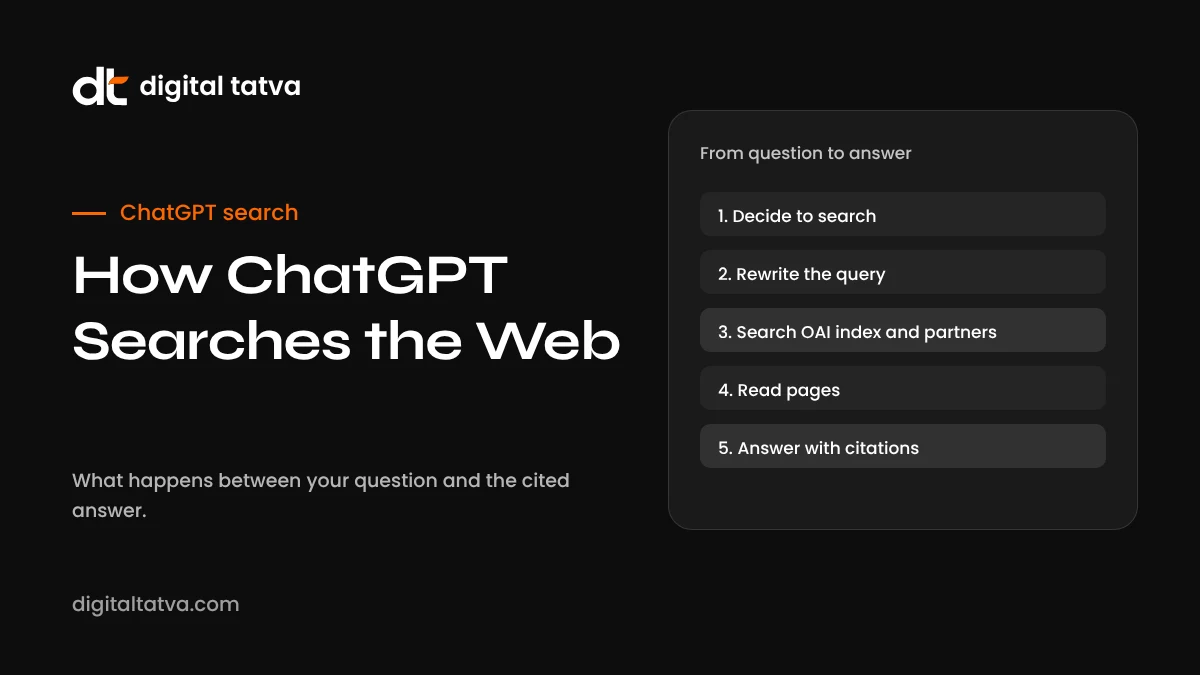
- Decide whether to search. ChatGPT checks whether your question needs fresh or specific information. A question like “explain photosynthesis” may be answered from memory; “best CRM for a small agency right now” usually triggers a search.
- Rewrite the question. OpenAI says ChatGPT “typically rewrites your query into one or more targeted queries”. A long conversational question becomes short search-style queries.
- Add context. Your approximate location (from your IP address) can shape local results, and if memory is on, saved memories can influence the rewritten queries. OpenAI says it does not share your IP address itself with third-party providers.
- Search. The queries run against OpenAI’s own search systems, built from pages crawled by OAI-SearchBot, and sometimes partner providers.
- Search again if needed. After reviewing the first results, ChatGPT may send follow-up queries to fill gaps.
- Read pages. It reads the most relevant results. When you paste a link or ask it to open a page, the ChatGPT-User agent fetches that page.
- Write and cite. It writes an answer and attaches citations. On the web you can open the sources list to see every page it used.
Where ChatGPT’s search results come from
| Source | What it does | What it means for you |
|---|---|---|
| OpenAI’s own index (OAI-SearchBot) | Crawls the web so pages can appear in ChatGPT search answers | Your site must allow OAI-SearchBot to be eligible |
| Partner search providers | OpenAI says ChatGPT “sometimes partners with other search providers”; its privacy policy links name Microsoft | Strong Bing visibility still helps; verify your site in Bing Webmaster Tools |
| Specialist partners | Shopping, maps and reservation partners power some answers, such as restaurant bookings through OpenTable, Resy or Yelp | Keep product feeds, listings and business profiles accurate |
| Pages fetched on request (ChatGPT-User) | Opens pages users link to or that Custom GPT actions need | OpenAI says robots.txt rules “may not apply” because a user started the action |
| Training data | Used when ChatGPT does not search | Older facts may appear; see our guide to outdated AI answers |
OpenAI’s crawlers and what each one does
| Crawler | Purpose | Used for training? | Respects robots.txt? |
|---|---|---|---|
| OAI-SearchBot | Surfaces websites in ChatGPT search features | Not described as a training crawler | Yes |
| GPTBot | Collects content that may be used to train foundation models | Yes, potentially | Yes |
| ChatGPT-User | Visits pages when users ask ChatGPT or Custom GPTs, and supports GPT Actions | Not described as training | May not apply, as actions are user-initiated |
| OAI-AdsBot | Checks landing pages submitted as ChatGPT ads for policy and relevance | No, OpenAI says its data is not used for training | Only visits pages submitted as ads |
OpenAI also notes that each setting is independent, and that if a site allows both OAI-SearchBot and GPTBot, it may use one crawl for both purposes. For the full decision on which bots to allow, see what blocking each AI crawler really does.
How ChatGPT chooses which pages to cite
OpenAI says ChatGPT ranks results “using multiple factors” and that “placement is not guaranteed”. It does not publish the full list. Independent research points to patterns:
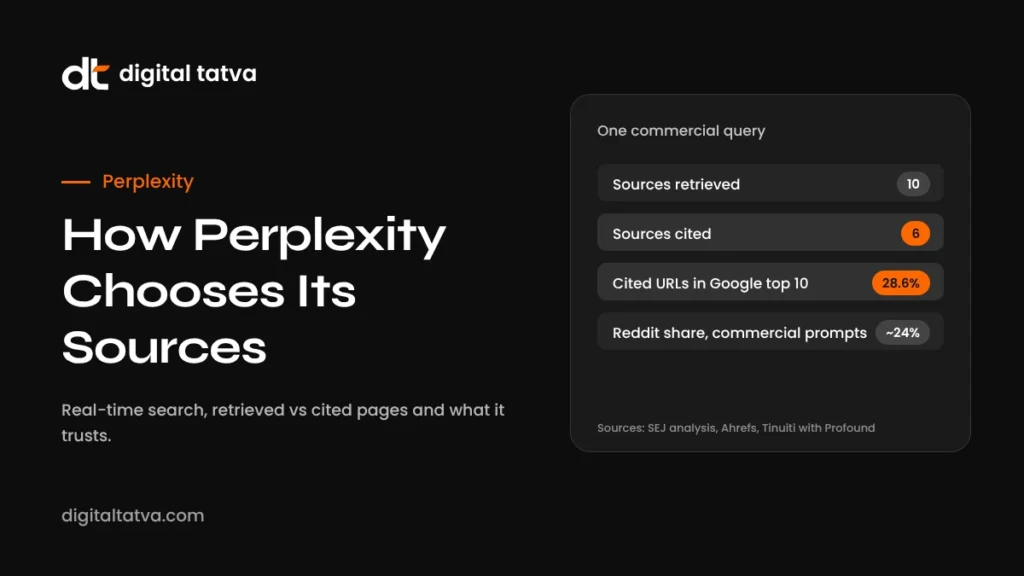
- ChatGPT cites a wide range of pages. Ahrefs found only 6 to 8% of the URLs ChatGPT cited ranked in Google’s top 10, far less than Perplexity’s 28.6%, so Google rank alone does not predict ChatGPT citations.
- Citations are volatile. In Ahrefs’ 20-day study, 59% of ChatGPT’s cited sources were gone the next day, though most came back within a few days.
- Pages that rank still last longer. In the same study, ChatGPT kept citing pages that ranked in Google for a week or more more often (11% against 4%).
- Citations do not equal mentions. Ahrefs found that for 54% of the sites ChatGPT cited, the brand behind the site was not named in the answer.
For data on what drives ChatGPT mentions, see our ChatGPT brand visibility report.
How to make your pages eligible and easy to cite
- Allow OAI-SearchBot in robots.txt and make sure your firewall or CDN does not block OpenAI’s published search IP addresses.
- Verify your site in Bing Webmaster Tools and fix crawl errors, since partner providers can feed ChatGPT search.
- Keep key facts in plain HTML. ChatGPT’s crawlers read text far more reliably than content loaded by scripts.
- Answer the question in the first lines of a page and use headings that match how people ask.
- Show dates and update pages. OpenAI warns that results “can be incomplete, outdated, or incorrect”; current, dated content is easier to trust.
- Build third-party presence. Reviews, comparison articles and industry coverage give ChatGPT more places to find you.
- Track your citations over weeks, not single checks. See our ChatGPT rank tracking tools.
For the full playbook, read how to get your brand in ChatGPT.
Want to know if ChatGPT can see your site? Our AEO audit checks OAI-SearchBot access, Bing indexing, how ChatGPT describes your brand and which pages it cites instead of yours. Request an AEO audit.
Related guides
- Where do LLMs get their data?
- ChatGPT indexing: how to get indexed
- How to get your brand in ChatGPT
- What blocking each AI crawler really does
- How Perplexity chooses its sources
Frequently asked questions
Does ChatGPT search the web for every question?
No. It searches when a question would benefit from current information or when you choose web search. Otherwise it answers from its training data.
What search engine does ChatGPT use?
OpenAI runs its own search systems, fed by its OAI-SearchBot crawler, and says ChatGPT sometimes partners with other search providers. Its help pages link to Microsoft’s privacy policy among those providers.
Does ChatGPT use Bing?
OpenAI says ChatGPT sometimes partners with third-party search providers and names Microsoft through its privacy policy links. Being well indexed in Bing is still a sensible step.
What is OAI-SearchBot?
OpenAI’s search crawler. It surfaces websites in ChatGPT search features. Sites that block it are not shown in ChatGPT search answers.
What is the difference between GPTBot and OAI-SearchBot?
GPTBot collects content that may be used to train OpenAI’s models. OAI-SearchBot indexes pages for ChatGPT search. Blocking one does not block the other.
What is ChatGPT-User?
The agent ChatGPT uses when a user asks it to open a page or when a Custom GPT action fetches content. OpenAI says robots.txt rules may not apply because the user started the request.
How long does it take ChatGPT to respect a robots.txt change?
OpenAI says it can take about 24 hours for its systems to adjust after a robots.txt update.
How does ChatGPT decide which websites to cite?
OpenAI says it ranks results using multiple factors and does not guarantee placement. In practice, clear, relevant, current and accessible pages are cited more often.
Why does ChatGPT rewrite my question?
Conversational questions make poor search queries. ChatGPT turns them into shorter targeted queries and may run follow-up searches after reading the first results.
Does ChatGPT use my location when searching?
It uses approximate location from your IP address for local results, and you can choose to share precise device location. OpenAI says it does not pass your IP address itself to third-party providers.
Can ChatGPT read JavaScript-heavy websites?
Not reliably. Important text should be in the HTML so crawlers can read it without running scripts.
Why does ChatGPT cite different sources each time?
Citations are volatile. Ahrefs found 59% of ChatGPT’s cited sources were gone the next day, although many came back within days.
Does ranking on Google help me appear in ChatGPT?
A little. Ahrefs found only 6 to 8% of ChatGPT’s cited URLs ranked in Google’s top 10, but pages that ranked stayed cited for longer.
Can I submit my website to ChatGPT?
There is no submit form. Allow OAI-SearchBot, keep your site crawlable, verify it in Bing Webmaster Tools and earn links and mentions so it gets discovered.
Does ChatGPT search use my memories?
If memory is turned on, OpenAI says saved memories can help shape the rewritten search queries.
Are ChatGPT search citations always accurate?
No. OpenAI says results and citations can be incomplete, outdated or incorrect, and recommends checking sources and dates.
What is OAI-AdsBot?
OpenAI’s crawler that checks landing pages submitted as ChatGPT ads for policy compliance and relevance. OpenAI says its data is not used for training.
How do I check if ChatGPT can access my site?
Check robots.txt for OAI-SearchBot rules, confirm your CDN or firewall allows OpenAI’s search IP ranges, and ask ChatGPT with search on about a recent page from your site.
How can I see which sources ChatGPT used?
On the web, open the sources list or the more options menu on an answer to view every cited page.
How do I get my brand mentioned in ChatGPT answers?
Be easy to crawl and quote, keep facts consistent, earn coverage on trusted third-party sites and track your citations over time.
Product details, prices and features are checked at the time of writing and can change. Sources are linked in the text so you can check them yourself.
How does your brand appear in AI answers?
We test the questions your buyers ask across the major AI assistants and search engines, then show you what to fix first.
Get an AI Visibility Audit