ChatGPT Brand Visibility Report 2026: Citations, Mentions and What Drives Them
Our ChatGPT Brand Visibility Report 2026 brings together the best public data on who ChatGPT cites, what drives brand mentions, traffic, ads and a 90-day plan.
On this page
- Key takeaways
- About this report
- 1. ChatGPT’s audience in 2026: why brand visibility matters now
- 2. How ChatGPT decides which brands to mention
- 3. Which sources ChatGPT cites in 2026
- 4. What correlates with brand visibility in ChatGPT
- 5. Volatility: ChatGPT rarely gives the same list twice
- 6. Traffic and conversions: what ChatGPT visitors are worth
- 7. Ads, shopping and checkout: the commercial layer arrives
- 8. What the data means for different businesses
- 9. The metrics that matter for ChatGPT brand visibility
- 10. A 90-day plan to improve ChatGPT brand visibility
- 11. What to watch in 2027
- Frequently asked questions
Last updated: 26 November 2026
Quick answer: In 2026 ChatGPT reaches close to a billion people every week, and it has become a place where buyers shortlist brands. The public research points to five facts. Most of ChatGPT’s citations go to third-party sites such as Wikipedia, Reddit, review sites, retailers and news, not to brand websites. Branded web mentions correlate more strongly with AI visibility than backlinks do. The brand lists in answers change on almost every run, so visibility share matters more than rank. Referral traffic is still small, but the visitors often arrive ready to act. And ads and shopping features are now part of the answer page. Brands that want to be recommended need to be talked about in the right places, be easy for ChatGPT to crawl, and measure their share of answers over many prompts.
Key takeaways
- ChatGPT passed 900 million weekly users in February 2026, and in July 2026 OpenAI said its models reach more than 1 billion active users.
- Wikipedia and Reddit are still the two most cited domains in ChatGPT answers, but their share swings sharply from month to month.
- One vendor study found brand and product sites make up only about 11% of ChatGPT Search citations. The other 89% come from third parties.
- In Ahrefs’ study of about 75,000 brands, branded web mentions (0.664) correlated with ChatGPT visibility far more than Domain Rating (0.266).
- Ask ChatGPT the same question many times and you will rarely get the same brand list twice. Track how often you appear, not your position.
- ChatGPT referrals are under 1% of traffic for most sites. Studies disagree on how well they convert, so measure your own data.
- Ads started testing in February 2026 in the US, and OpenAI says ads do not influence answers. Organic visibility still decides who gets recommended.
About this report
This ChatGPT Brand Visibility Report 2026 brings together the most useful public research on how ChatGPT mentions, cites and recommends brands. We reviewed figures released by OpenAI, large citation datasets from Ahrefs, Similarweb and Semrush, a peer-reviewed study in the journal Marketing Science, analytics data from Microsoft Clarity and independent consultants, and consistency tests run by SparkToro and Gumshoe. Each finding names its source and date so you can judge it for yourself.
Three cautions before you read the numbers:
- Much of the citation data is from the United States. Patterns are similar in other English-speaking markets, but local sources, languages and retailers change the picture. Test your own market.
- Several studies come from companies that sell AI visibility or analytics tools. We say so where it applies. Their data is useful, but treat single numbers as directional.
- ChatGPT changes quickly. A source that dominated citations one quarter can fall sharply the next, as Reddit and Wikipedia did in late 2025.
Digital Tatva did not run a paid survey or a proprietary panel for this report, and we do not present any figure here as our own data. If you want the practical how-to rather than the research, read our guide on how to check and improve ChatGPT brand visibility.
1. ChatGPT’s audience in 2026: why brand visibility matters now
The reason this topic moved from an SEO side project to a board-level question is reach. ChatGPT is now one of the most used consumer products in the world, and a growing share of its use is people asking for advice, comparisons and recommendations.
| Date | ChatGPT weekly active users | Source |
|---|---|---|
| February 2025 | About 400 million | OpenAI, as reported by The Next Web |
| July 2025 | 700 million | OpenAI usage study |
| October 2025 | 800 million | Sam Altman, OpenAI |
| February 2026 | Over 900 million | OpenAI, reported by TechCrunch |
| July 2026 | Close to 1 billion | The Information, based on figures OpenAI shared internally |
| 31 July 2026 | OpenAI: its models reach more than 1 billion active users | OpenAI announcement (covers ChatGPT and its other products) |
By mid 2026, roughly one in eight people online were opening ChatGPT in a given week, according to reporting by The Next Web. OpenAI had originally hoped to reach a billion weekly users by the end of 2025. On 31 July 2026 it said its models now reach more than one billion active users, a figure that includes ChatGPT and its other products.
What people use ChatGPT for
OpenAI’s own research paper on usage, published in September 2025 and based on 1.5 million conversations, found that:
- About three quarters of conversations are about practical guidance, seeking information and writing.
- 49% of messages are “asking” for information or advice, 40% are “doing” a task, and 11% are “expressing” thoughts or feelings.
- Around 70% of use is not work related, so consumer purchases, travel, health and personal decisions are a big part of the mix.
- Adoption in the lowest income countries was growing more than four times faster than in the highest income countries by May 2025.
That last point matters for anyone selling across borders. ChatGPT is not a US-only channel. Growth is strongest in markets such as India, Southeast Asia, Latin America and Africa, where buyers often use it in their own language and on mobile.
2. How ChatGPT decides which brands to mention
ChatGPT has two ways of knowing about your brand, and they behave differently.
| Mode | Where the answer comes from | What influences it | How fast it changes |
|---|---|---|---|
| Model memory (no web search) | What the model learned during training | How often and how consistently your brand appeared in public text before the training cut-off | Slowly, with each new model |
| ChatGPT Search (web results) | Pages ChatGPT finds and reads at the moment of the question | Crawl access, the pages that rank for the question, third-party coverage and freshness | Quickly, sometimes daily |
Presenc AI, a company that sells AI monitoring software, analysed 1,800 answers given without web search in the first quarter of 2026. It reported that 73% of brand mentions reflected the brand’s presence in training data, 19% reflected community discussion, and only 8% reflected content published directly by the brand. The sample is small and the prompts are not public, so treat the split as a signal rather than a rule. The direction is clear, though: what others say about you shapes ChatGPT’s memory far more than your own website.
Crawler access is the first gate
For ChatGPT Search, OpenAI’s documentation is explicit. Sites that block OpenAI’s search crawler, OAI-SearchBot, do not appear in ChatGPT search answers, except as plain navigational links. OpenAI runs separate crawlers for search (OAI-SearchBot), for pages a user asks ChatGPT to open (ChatGPT-User) and for model training (GPTBot). You can block training and still allow search. Our guide to ChatGPT indexing shows how to check your robots.txt and firewall settings.
3. Which sources ChatGPT cites in 2026
When ChatGPT searches the web, it shows the sources it used. Three large datasets show which domains win those citations.
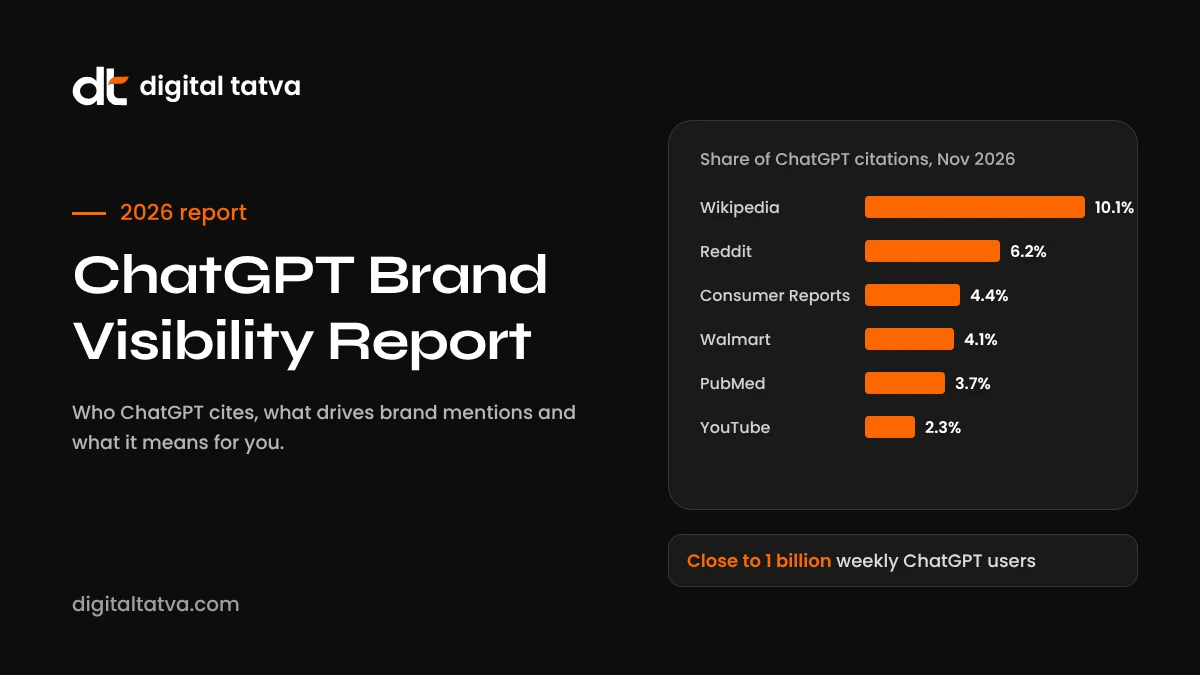
Ahrefs Brand Radar: top cited domains, November 2026
Ahrefs tracks the domains ChatGPT cites across a broad set of US queries in every topic and updates the list monthly. Mention share is a domain’s citations as a percentage of all citations to the top sources.
| Rank | Domain | Share of citations | Type of source |
|---|---|---|---|
| 1 | Wikipedia | 10.1% | Encyclopedia |
| 2 | 6.2% | Community forum | |
| 3 | Consumer Reports | 4.4% | Product reviews |
| 4 | Walmart | 4.1% | Retailer |
| 5 | PubMed | 3.7% | Medical research |
| 6 | PubMed Central | 3.1% | Medical research |
| 7 | US FDA | 2.9% | Government |
| 8 | YouTube | 2.3% | Video |
| 9 | Getty Images | 2.3% | Images |
| 10 | Home Depot | 2.2% | Retailer |
The rest of the top 50 is a mix of health authorities, retailers and marketplaces (Target, Lowe’s, eBay, Etsy, Best Buy), car research sites, review and trust platforms (Trustpilot, BBB, Tripadvisor, NerdWallet) and news publishers. In the same month, Reddit’s citations fell 32% while Walmart’s rose 55%, which shows how fast the mix moves.
Similarweb: ChatGPT compared with Google AI Mode
Similarweb analysed nearly 600,000 citation events in the US in January and February 2026. In ChatGPT with web search, Wikipedia led with 13.2% of citations, followed by Reddit (12.0%), OpenAI’s own site (6.2%), Walmart (2.9%) and YouTube (2.7%). In Google AI Mode, the leaders were Fandom, Wikipedia, YouTube and Reddit. The overlap is partial, so a strategy built only for Google will not fully carry over to ChatGPT.
Similarweb also found that most ChatGPT citations point to deep pages, such as blog posts, FAQs, guides and product pages, rather than homepages. Comparison and opinion prompts tend to cite community sites and niche publishers. Decision prompts, where someone is ready to choose, lean more on major publishers, aggregators and brand sites.
Semrush: the big shift of late 2025
Semrush tracked about 230,000 prompts across ChatGPT, Google AI Mode and Perplexity for 13 weeks between July and October 2025, covering more than 100 million citations. In early August 2025, Reddit was cited in close to 60% of ChatGPT responses and Wikipedia in about 55%. By mid September, Reddit had dropped to around 10% and Wikipedia to under 20%. Forbes, Medium, LinkedIn and PR Newswire gained. Reddit and Wikipedia stayed in first and second place, but the gap to everyone else narrowed.
The source mix: brand sites are a small slice
Presenc AI’s Q1 2026 analysis of 5,200 ChatGPT Search answers (vendor data) found an average of 4.1 cited sources per answer and this split by source type:
| Source type | Share of ChatGPT Search citations |
|---|---|
| Major news | 22% |
| Industry publications and blogs | 17% |
| Wikipedia | 14% |
| Brand and product sites | 11% |
| Reddit and Quora | 9% |
| Review aggregators | 8% |
| Other | 8% |
| Government and academic | 6% |
| YouTube transcripts | 5% |
The same study estimated that the second citation gets about 68% of the clicks of the first, the third about 44% and the fifth and later about 13%. Being cited first matters, but simply being cited matters more.
4. What correlates with brand visibility in ChatGPT
The largest public study of this question is Ahrefs’ analysis of about 75,000 brands across ChatGPT, Google AI Mode and AI Overviews, published in December 2025 and updated in 2026. It measured how strongly different factors move together with how often a brand appears in AI answers (Spearman correlation, where 1 is a perfect match and 0 is no relationship).
| Factor | Correlation with ChatGPT visibility | What it means |
|---|---|---|
| Branded web mentions | 0.664 | How often your brand is named across the web, linked or not |
| Branded anchors | 0.511 | Links that use your brand name as the link text |
| Branded search volume | 0.352 | How many people search for your brand by name |
| Ad traffic | 0.286 | Estimated paid search traffic |
| Domain Rating | 0.266 | Strength of your backlink profile |
| Branded traffic | 0.235 | Organic traffic from brand searches |
| Backlinks and URL rating | Very weak | Raw link counts on their own |
Across all three AI surfaces, YouTube mentions showed the strongest correlation of all (about 0.737). The study also found high overlap between the brands each assistant mentions: 0.769 between AI Mode and ChatGPT, and 0.749 between AI Overviews and ChatGPT. In plain terms, brands that are widely discussed tend to show up everywhere, and classic link metrics explain much less than most SEO teams expect.
Correlation is not proof of cause. A famous brand gets more mentions and more AI visibility for the same underlying reason. Still, the pattern fits everything else in this report: ChatGPT reflects the public conversation about a brand.
Two other findings are worth knowing. An Ahrefs test of 1,885 pages that added schema markup found no meaningful change in ChatGPT citations, so structured data is good hygiene but not a shortcut. And research described by the agency Onely suggests ChatGPT tends to favour brands it already knows, even when product facts are identical, which makes early, consistent brand building more valuable.
5. Volatility: ChatGPT rarely gives the same list twice
In early 2026, SparkToro and Gumshoe asked about 600 volunteers to run 12 identical prompts through ChatGPT, Claude and Google’s AI, nearly 3,000 runs in total. The odds of getting the same list of brands twice were under 1 in 100. The odds of the same list in the same order were closer to 1 in 1,000. Even the length of the list changed, from two items to ten or more.
Some brands still showed up consistently. For a given intent, leading brands appeared in 60% to 90% of answers even though their position moved around. Smaller, more specific markets gave more stable answers than broad categories such as headphones or CRM software.
A separate test reported by Onely ran 143 headphone questions through ChatGPT on seven days in July 2026. Repeats of the exact same question shared about 74% of brands. Differently worded questions on the same day shared about 54%, so roughly one brand in a four-brand answer changed with the wording.
What this means for measurement: “We rank number 2 in ChatGPT” is not a meaningful claim. The useful metric is visibility share, the percentage of relevant prompts and runs in which your brand appears, tracked over time and against competitors. That is how good ChatGPT tracking tools report it.
6. Traffic and conversions: what ChatGPT visitors are worth
Being mentioned is the main prize, because many people act on an answer without clicking. But ChatGPT does send visitors, and three serious studies looked at their value. They do not agree, and the reasons are useful.
| Study | Data | Share of traffic | Conversion finding |
|---|---|---|---|
| Kaiser and Schulze, Marketing Science (April 2026) | 973 e-commerce sites, about $20 billion revenue, Aug 2024 to Jul 2025 | Under 0.2% of all traffic; ChatGPT was over 90% of AI assistant sessions | Converted better than paid social but below every other traditional channel, including organic search and affiliate |
| Marie Haynes, reported by Search Engine Land | 100 websites, 12 months of GA4, 145 million sessions | ChatGPT sent 0.62% as many sessions as Google organic | 13.8% of ChatGPT visitors converted vs 3.02% from Google organic, but Google drove 27 times more conversions in total |
| Microsoft Clarity (November 2025) | More than 1,200 publisher and news sites | AI referrals under 1% of traffic, but grew 155.6% in eight months | AI visitors signed up at 1.66% vs 0.15% from search |
The difference is mostly about the type of site. For online shops that measure the last click before a sale, ChatGPT traffic looks average. For lead generation, content and subscription sites, visitors who arrive from ChatGPT often already know what they want, so they convert well. In every study, ChatGPT is still a small source of clicks compared with Google.
Last-click data also understates ChatGPT’s role. A buyer may hear your name in ChatGPT, then search for you on Google a week later. That visit is credited to Google. Watch branded search volume and direct traffic alongside AI referrals, and set up AI traffic tracking in GA4 so you can see your own numbers.
7. Ads, shopping and checkout: the commercial layer arrives
2026 is the year ChatGPT became a commercial channel as well as an organic one.
| Date | Change | What it means for brands |
|---|---|---|
| September 2025 | Instant Checkout launched, starting with Etsy sellers, using the Agentic Commerce Protocol | Shoppers could buy some products inside ChatGPT |
| 16 January 2026 | OpenAI announced plans to test ads for logged-in adults in the US on the Free and Go plans | Paid placement became possible, below answers and labelled as sponsored |
| 9 February 2026 | Ad testing began in the US | Early advertisers could buy placements in relevant conversations |
| Early 2026 | Cost-per-click buying launched, with conversion tracking | Ads can be measured like search ads |
| March 2026 | Shopify moved ChatGPT purchases to the merchant’s own checkout, with products syndicated through its Agentic Storefronts channel, on by default | Shopify products can appear in ChatGPT with live price and stock |
| May 2026 | Reports said OpenAI had ended Instant Checkout and was building ads generated from product catalogues | The focus moved from taking a cut of sales to advertising |
OpenAI’s stated rules for ads are important for organic strategy. The company says ads do not influence the answers ChatGPT gives, ads are shown separately and labelled, they do not appear near sensitive topics such as health or politics, and they are not shown to users under 18. Paid plans such as Plus, Pro, Business and Enterprise are ad-free.
So ads can buy a spot next to the answer, not inside it. Whether ChatGPT names your brand in the answer still depends on the organic factors in this report. Read more in our guides to ChatGPT ads and ChatGPT shopping optimization.
8. What the data means for different businesses
B2B software and services
Buyers ask ChatGPT for shortlists (“best project management tool for a 20-person agency”) and comparisons. Industry publications, review platforms such as G2 and Capterra, Reddit threads and LinkedIn posts carry weight. Visibility depends on being included in credible third-party roundups and comparisons, and on clear pages that explain who you are for, your pricing and how you compare.
E-commerce and consumer brands
Retailers, marketplaces and review sites dominate citations for product questions. Clean product data on your own site and on the marketplaces you sell through, honest reviews, and coverage in respected review publications matter most. Shopify merchants should check their Agentic Storefronts settings.
Local businesses and professional services
ChatGPT leans on directories, maps data, review platforms and local news for “near me” and city-level questions. Consistent name, address and phone details everywhere, plus genuine reviews and local press, are the foundation.
Publishers and content sites
Being cited brings a small but often engaged stream of visitors. Original data, clear answers near the top of the page and deep, specific articles are what ChatGPT tends to cite. Make sure OAI-SearchBot is allowed.
Health, finance and other high-trust topics
Government agencies, medical research databases and established institutions take a large share of citations. Brands need real expert authorship, references to primary sources and a careful, accurate tone to be considered.
An illustrative scenario
This is an illustrative scenario, not a client story. Imagine a mid-sized accounting software company that ranks well on Google but is missing from ChatGPT answers to “best accounting software for small businesses”. A review of the cited sources shows ChatGPT relies on three review sites, two Reddit threads and a comparison article from an industry publication, none of which mention the company. The fix is not more blog posts on its own site. It is getting listed and reviewed on those review sites, earning a place in the next edition of that comparison, answering real questions in the communities where buyers ask them, and publishing a clear comparison page that ChatGPT can quote. Results take months, not days, and there is no guarantee of a mention, but the effort now targets the sources that actually feed the answer.
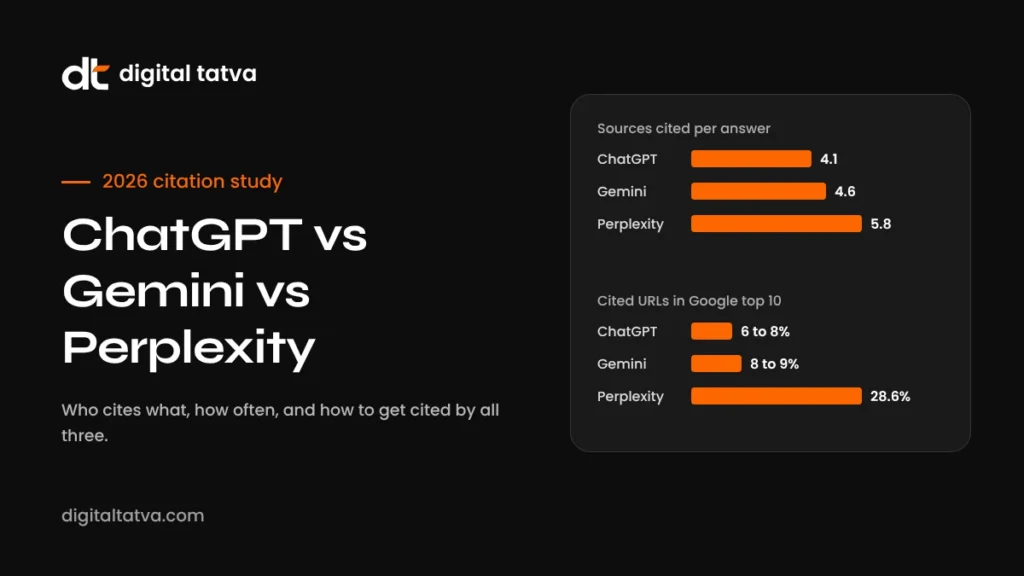
ChatGPT is only one of the AI engines your buyers use. To see how its citations differ from Google Gemini and Perplexity, read our ChatGPT vs Gemini vs Perplexity citation study.
9. The metrics that matter for ChatGPT brand visibility
Based on the research above, these are the measures worth tracking every month.
| Metric | What it measures | How to get it |
|---|---|---|
| Visibility share | Percentage of relevant prompts and runs where your brand is mentioned | An AI visibility tracker running the same prompt set several times |
| Share of voice | Your mentions compared with named competitors | Same tracker, competitor set defined |
| Citation share | How often your own pages are cited as sources | Tracker citation reports and server logs |
| Source coverage | Whether the third-party sites ChatGPT cites in your category mention you | Review cited domains, then check each source |
| Accuracy | Whether ChatGPT describes your products, prices and facts correctly | Monthly manual review of key prompts |
| Sentiment | Whether mentions are positive, neutral or negative | Tracker sentiment reports plus manual checks |
| AI referral traffic and conversions | Visits and leads from ChatGPT | GA4 with an AI traffic segment |
| Branded search and direct traffic | Demand created by being mentioned | Google Search Console and analytics |
To compare tools that report these numbers, see our list of the best AI visibility tools and the full AI visibility tools directory.
10. A 90-day plan to improve ChatGPT brand visibility
Days 1 to 30: measure and fix access
- Write 30 to 50 prompts your buyers really ask, across the stages of research, comparison and decision, and in each language and country you sell in.
- Run them several times in ChatGPT with web search on and off, or use a tracker, and record your visibility share and the competitors named.
- List the domains ChatGPT cites for those prompts. These are your target sources.
- Check robots.txt, your firewall and your CDN so that OAI-SearchBot and ChatGPT-User can reach your pages.
- Note any wrong facts ChatGPT states about your brand.
Days 31 to 60: build the sources ChatGPT trusts
- Get listed and reviewed on the review platforms, directories and marketplaces that appear in your cited domains.
- Pitch the industry publications and comparison articles that ChatGPT cites, with useful data or expert comment.
- Take part honestly in relevant Reddit, Quora and community discussions. Disclose who you are, help first and never spam.
- Publish or improve clear pages for your key questions: what you do, who it is for, pricing, comparisons and FAQs, with the answer in the first lines.
- Make your facts consistent everywhere: name, description, founding date, locations, prices and product names.
Days 61 to 90: earn mentions and review progress
- Publish one piece of original research, a benchmark or a useful dataset that others will quote.
- Create or improve video content, since YouTube mentions correlate strongly with AI visibility.
- Correct wrong information at its source. Our guide on fixing wrong AI answers about your brand explains how.
- Rerun your prompt set and compare visibility share, share of voice and accuracy with day one.
- Report AI referral traffic, branded search and leads alongside visibility, so the work is judged on business results.
11. What to watch in 2027
- Ads beyond the US. If ChatGPT ads roll out to more countries, paid and organic visibility will need to be planned together.
- Product feeds and agentic shopping. Catalogue-based ads and storefront integrations will make product data quality even more important.
- Source mix shifts. The late 2025 drop in Reddit and Wikipedia citations shows ChatGPT’s source preferences can change overnight. Spread your presence across several source types.
- Memory and personalisation. As ChatGPT remembers more about each user, two people may get different recommendations for the same question, which makes sampling and share-based measurement even more important.
- Better first-party data. Bing Webmaster Tools already reports citations in Copilot answers. Watch for similar reporting from OpenAI.
Want to know where your brand stands in ChatGPT? Digital Tatva runs AI visibility audits that measure your visibility share, the sources ChatGPT relies on in your category and the gaps your competitors are filling. No one can guarantee a place in AI answers, but we can show you what is holding your brand back and what to fix first.
Ready to act on the data? Follow our step-by-step guide on how to get your brand in ChatGPT.
Frequently asked questions
What is ChatGPT brand visibility?
It is how often and how well ChatGPT mentions, recommends or cites your brand when people ask questions related to what you sell. It is usually measured as visibility share: the percentage of relevant prompts in which your brand appears.
How many people use ChatGPT in 2026?
ChatGPT passed 900 million weekly active users in February 2026. On 31 July 2026 OpenAI said its models reach more than 1 billion active users across ChatGPT and its other products.
Which websites does ChatGPT cite most?
Wikipedia and Reddit are the two most cited domains in ChatGPT answers in 2026, followed by review sites such as Consumer Reports, retailers such as Walmart and Home Depot, medical and government sources, and YouTube. The mix varies by topic and changes from month to month.
Do backlinks help you appear in ChatGPT?
Less than most people expect. In Ahrefs’ study of about 75,000 brands, branded web mentions correlated much more strongly with ChatGPT visibility (0.664) than Domain Rating (0.266), and raw backlink counts showed only a very weak relationship.
Why does ChatGPT give different brand recommendations each time?
Its answers are generated, not retrieved from a fixed list. Research by SparkToro and Gumshoe found less than a 1 in 100 chance of getting the same brand list twice. That is why you should track how often you appear across many runs, not your position in one answer.
Does ChatGPT send traffic to websites?
Yes, but not much yet. Studies put ChatGPT and other AI referrals at under 1% of total traffic for most sites. Conversion rates vary by industry, so check your own analytics.
Can you pay to appear in ChatGPT answers?
Not inside the answer. OpenAI began testing ads in the US in February 2026, shown below answers and labelled as sponsored, and it says ads do not influence what ChatGPT recommends. Organic visibility still depends on your reputation across the web.
How do I make sure ChatGPT can see my website?
Allow OpenAI’s search crawler, OAI-SearchBot, in your robots.txt and firewall. According to OpenAI, sites that block it do not appear in ChatGPT search answers except as navigational links.
How long does it take to improve ChatGPT visibility?
Fixes such as crawler access can help ChatGPT Search within weeks. Building the third-party mentions that shape recommendations usually takes several months, and changes to ChatGPT’s built-in knowledge depend on new model releases.
Product details, prices and features are checked at the time of writing and can change. Sources are linked in the text so you can check them yourself.
How does your brand appear in AI answers?
We test the questions your buyers ask across the major AI assistants and search engines, then show you what to fix first.
Get an AI Visibility Audit