RAG for Marketers: How Retrieval Decides Which Pages AI Cites
RAG explained for marketers: how AI search retrieves, selects and cites passages, why retrieved is not cited, and a checklist for RAG-friendly content.
On this page
Quick answer: Retrieval-augmented generation (RAG) is how AI search tools such as ChatGPT search, Perplexity and Google AI Overviews answer with current, cited information. The AI first retrieves relevant passages from web pages or documents, adds them to its prompt and then generates an answer based on them. For marketers this means AI visibility depends on two things: whether your page is retrieved for the question, and whether its passages are clear and quotable enough to be used and cited.
Key takeaways
- RAG was introduced in a 2020 research paper by Facebook AI Research and is now the standard way AI search tools stay current.
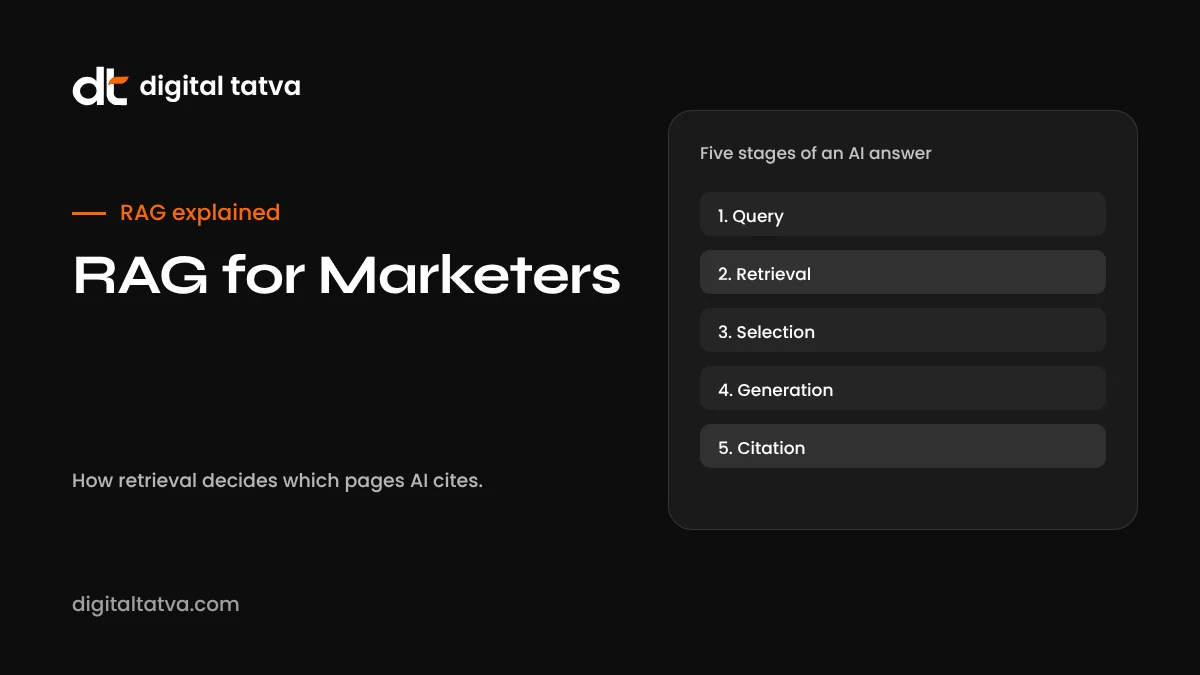
- AI search works in stages: query, retrieval, selection, generation and citation. You can lose at any stage.
- AI usually reads passages, not whole pages, so each section of your page needs to make sense on its own.
- More pages are retrieved than cited: in one Perplexity analysis, 10 sources were retrieved and 3 to 6 cited.
- Clear answers, specific facts, good headings and accessible HTML make passages easier to retrieve and quote.
- Retrieval changes constantly, which is why AI citations move from day to day.
RAG in plain English
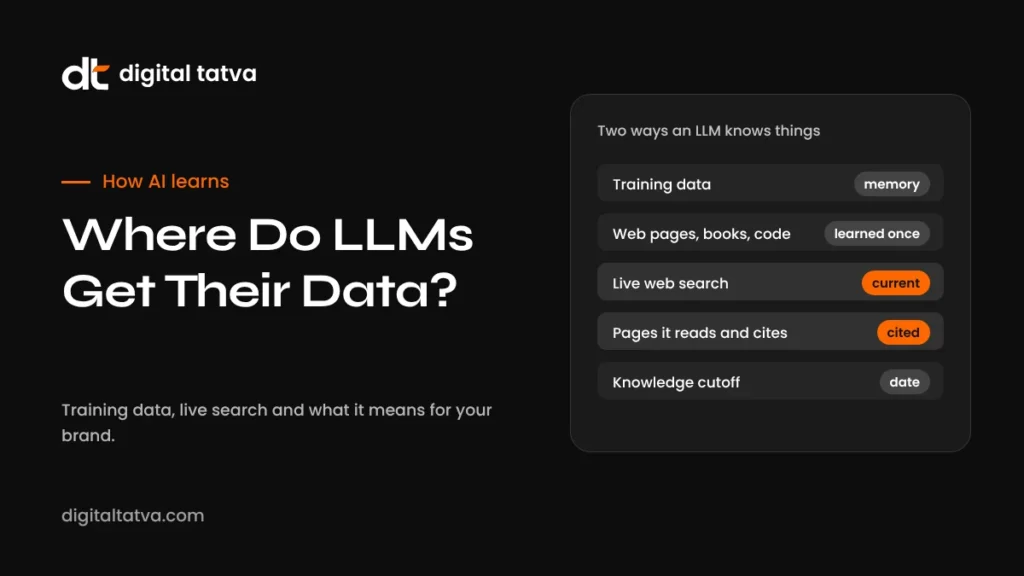
A language model on its own only knows its training data. RAG gives it an open book. Before answering, it looks up the most relevant information, reads it and writes an answer grounded in what it found. It is the difference between answering a quiz from memory and answering with the right pages open in front of you.
For the technical details, including embeddings, vector databases and how to build a RAG chatbot, see our explainer what is RAG? This guide covers what RAG means for getting your brand cited.
The five stages of an AI search answer
| Stage | What the AI does | How you can lose | What helps |
|---|---|---|---|
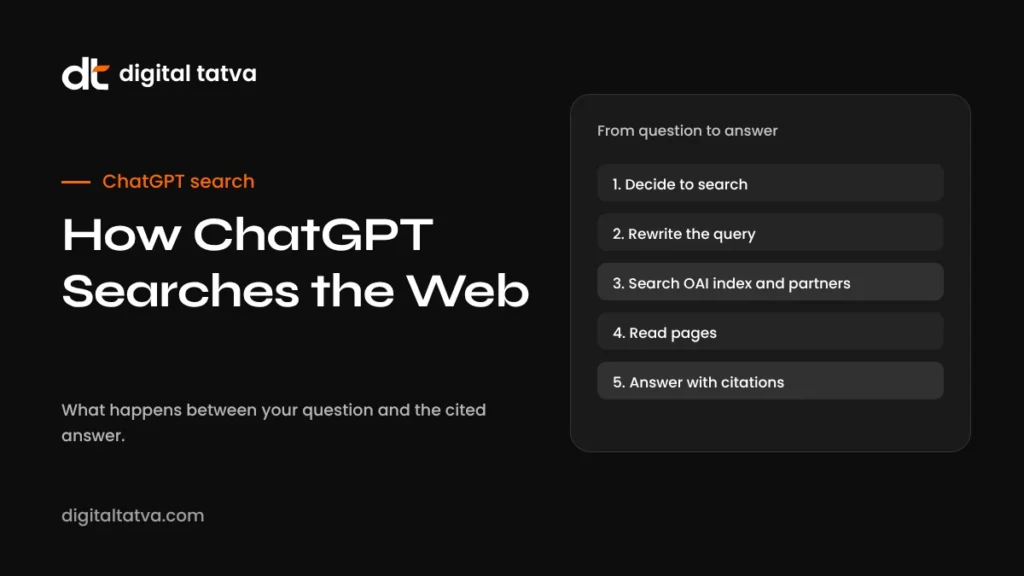
| 1. Query | Turns the question into one or more searches (ChatGPT rewrites queries; Google uses query fan-out) | Your pages do not match how the question is searched | Cover real questions and related sub-questions |
| 2. Retrieval | Finds candidate pages or passages from an index | Not indexed, blocked crawler or weak relevance | Allow search crawlers; rank in search |
| 3. Selection | Picks the most useful passages | Another page answers more directly or more recently | Lead with the answer; show dates and facts |
| 4. Generation | Writes the answer using the selected passages | Your facts are vague or buried | Use specific, quotable sentences |
| 5. Citation | Links the sources it relied on | Your passage was paraphrased with another source credited | Unique data, clear brand naming |
Why passages matter more than pages
Retrieval systems usually split pages into chunks and score each chunk against the query. A section that starts “As mentioned above…” or depends on an image to make sense scores poorly on its own. A section with a clear heading, a direct one or two sentence answer and supporting detail is far more likely to be picked.
| Hard for RAG to use | Easy for RAG to use |
|---|---|
| “Our solutions empower businesses to reach their potential.” | “Our accounting software costs $29 a month for up to 3 users.” |
| Key facts only in images, PDFs or interactive widgets | Key facts in plain HTML text |
| Long introductions before the answer | The answer in the first sentence under each heading |
| Vague headings such as “Overview” | Question headings such as “How much does it cost?” |
| Undated statistics | Statistics with a source and date |
Retrieved is not the same as cited
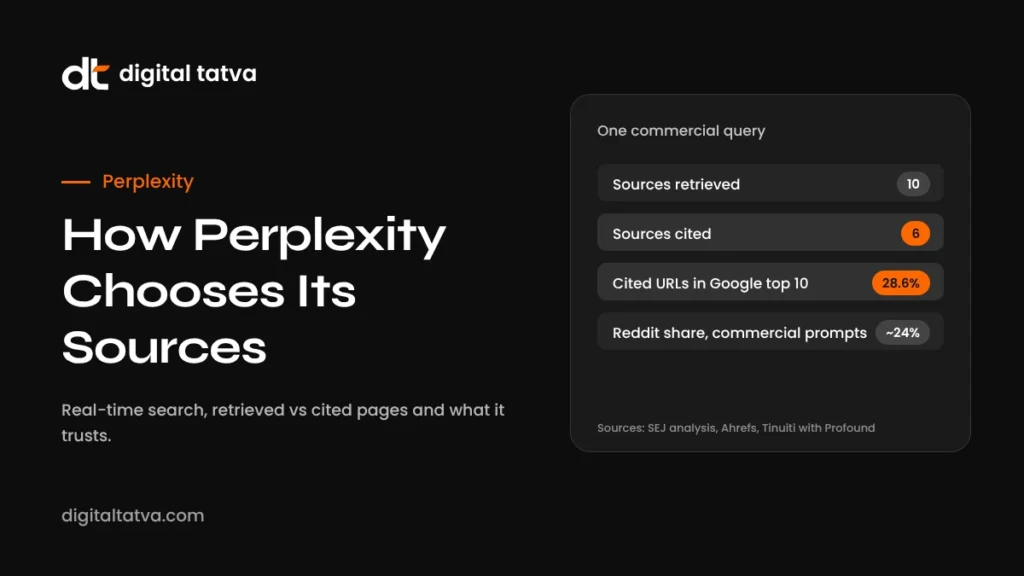
AI tools retrieve more than they cite. In an analysis of Perplexity’s answer stream published by Search Engine Journal in July, a commercial question retrieved 10 sources and cited 6, while a news question retrieved 10 and cited 3. In a Deep Research run, one detailed comparison page took 20 of 30 citations. Being retrieved gets you into the room; being the clearest, most complete passage gets you cited.
Why RAG makes citations unstable
Because retrieval runs fresh for each question, small changes in wording, index updates or new competing pages change what is cited. Ahrefs tracked about 37,500 citations daily for 20 days and found 59% of ChatGPT’s cited sources were gone the next day, though most returned within days. Measure trends over weeks, not single checks; our guide to keywords vs prompts explains what to track.
A RAG-friendly content checklist
- One question per section, with the question as the heading.
- Answer first, in one or two plain sentences, then add detail.
- Name things explicitly. Use your brand and product names instead of “we” and “it” in key sentences.
- State specific facts: prices, numbers, locations, dates, specifications.
- Use tables for comparisons and specifications.
- Keep sections self-contained so each makes sense if read alone.
- Date and refresh statistics and prices.
- Make it crawlable: plain HTML text, fast pages and AI search crawlers allowed.
Want your pages rewritten to be retrieved and cited? Digital Tatva’s AEO content service restructures key pages into clear, quotable sections built for AI retrieval. Request an AEO audit or see our AEO services.
Related guides
- What is RAG? The technical explainer
- Where do LLMs get their data?
- How AI Overviews pick sources
- How Perplexity chooses its sources
- Refresh content for AEO
Frequently asked questions
What is RAG in simple terms?
Retrieval-augmented generation is when an AI looks up relevant information first and then writes its answer based on what it found, instead of relying only on memory.
Do ChatGPT and Perplexity use RAG?
Yes. When they search the web and cite sources, they are using retrieval-augmented generation.
Who invented RAG?
The term comes from a 2020 research paper by researchers at Facebook AI Research, led by Patrick Lewis.
Why does RAG matter for marketing?
It decides which pages AI search tools read and cite. If your pages are not retrieved or not quotable, competitors get the citation.
What is the difference between RAG and training data?
Training data is learned once and cannot be cited. RAG retrieves current information at the time of the question and usually cites it.
What is a chunk in RAG?
A section of a page, often a few paragraphs, that the retrieval system scores and may use on its own.
How do I make my content RAG-friendly?
Use question headings, answer first, keep sections self-contained, state specific facts, use tables and keep pages crawlable and current.
Why is my page retrieved but not cited?
Another source answered more directly, more recently or more completely. Retrieval systems pick more pages than they cite.
Does RAG read my whole page?
Usually it scores and uses relevant passages rather than the whole page, though some research modes read full pages.
Do images help with RAG?
Text matters most. Put key facts in text, and use images and video to support them.
Does schema markup help RAG?
It helps search engines understand pages, but the passage text still needs to be clear. Google says no special schema is required for AI features.
Why do AI citations change so often?
Retrieval runs fresh for each question, and small changes in wording, indexes or competing pages change the result.
Is RAG the same as AI search?
RAG is the technique behind AI search. AI search products combine RAG with ranking, safety checks and their own interfaces.
Does RAG use my website directly?
It uses pages from a search index, or pages fetched on request. Your site must be crawlable by the relevant search crawler.
How long should a RAG-friendly section be?
Long enough to answer one question fully, often one to three short paragraphs, with the answer in the first sentence.
Does keyword density matter for RAG?
Not in the old sense. Retrieval looks for meaning and relevance, so clear language that matches the question matters more.
Can RAG make mistakes?
Yes. The AI can misread or combine sources incorrectly. Independent studies have found frequent sourcing errors in AI search answers.
What is query rewriting?
When an AI turns a conversational question into shorter search queries before retrieval, as ChatGPT does.
What is query fan-out?
Google’s technique of splitting one question into several related searches across subtopics before combining the results.
How can I tell if AI retrieves my pages?
Track citations with AI visibility tools, check AI referral traffic in GA4 and test your key questions in each assistant.
Product details, prices and features are checked at the time of writing and can change. Sources are linked in the text so you can check them yourself.
How does your brand appear in AI answers?
We test the questions your buyers ask across the major AI assistants and search engines, then show you what to fix first.
Get an AI Visibility Audit