Best AI Mode tracking tools in 2026: compared
The best Google AI Mode tracking tools in 2026 compared for agencies: which plan includes AI Mode, which agency setup each fits, and starting prices for SE Visible, Peec AI, Otterly.AI and more.
On this page
- What is the best AI Mode tracking tool for agencies?
- AI Mode tracking tools compared: the agency matrix
- How should an agency read this matrix?
- Why does AI Mode need its own line in a client report?
- The 8 best AI Mode tracking tools in 2026, ranked for client work
- Which AI Mode tracking tool fits which agency setup?
- AI Mode tracking FAQ for agency owners
What is the best AI Mode tracking tool for agencies?
For an agency running AI Mode across a client book, SE Visible by SE Ranking is the best AI Mode tracking tool, because every client’s AI Mode answer arrives with the cited pages and the SEO metrics your team already reads. Five other tools fit narrower agency jobs: Peec AI for agencies that pick models per client, Otterly.AI for fixed prompt sets run on credits, Semrush AI Visibility Toolkit for retainers already reported from Semrush, Ahrefs Brand Radar for pitch research across a market, and Profound for enterprise accounts with procurement. The full matrix and the eight cards follow.
“Is AI Mode a separate line on our report, or part of Google?” It deserves its own line, because people search there differently: one in five AI Mode searches globally use voice, images, or documents. Those answers don’t map onto the positions a rank report shows, so a client can hold page one and still be missing from the answer. That’s why the readout needs a separate AI Mode entry, with the answer and its sources attached. This comparison follows the matrix I’d use to scope that line into a retainer.
AI Mode tracking tools compared: the agency matrix
The best AI Mode tracking tools for a client book differ on three things you scope a retainer around: which plan includes Google AI Mode tracking, which agency setup each tool fits, and the starting price. Every AI search tracking tool here covers AI Mode on at least one plan.
| Rank | Tool | AI Mode on | Best agency fit | Starting price |
|---|---|---|---|---|
| 1 | SE Visible | Every plan | AI Mode answers with cited-page SEO data for every client | $89/mo |
| 2 | Peec AI | One of 3 models below Enterprise | Picking engines per client | $95/mo |
| 3 | Otterly.AI | One of 3 engines per plan | Fixed prompt sets on credits | $29/mo |
| 4 | Rankscale | Every plan, credit-based | White-label dashboards from Growth | $99/mo ($84/mo yearly) |
| 5 | Semrush AI Visibility Toolkit | Prompt Tracking | Retainers reported from Semrush | $99/mo per domain (annual) |
| 6 | Nightwatch | Every plan | AI prompts next to SEO rank tracking | €79/mo |
| 7 | Ahrefs Brand Radar | Index and custom prompts | Pitch research across a market | From $199/mo |
| 8 | Profound | Enterprise plan | Enterprise accounts with procurement | Free trial; Enterprise custom |
How should an agency read this matrix?
Read the “AI Mode on” column first. An AI visibility tracker with AI Mode only on its Enterprise plan cannot be scoped into a mid-size retainer, however good the rest looks. Then check the agency fit against how your client book reports, and only then work out price per client, not price per plan.
The client’s own data won’t fill the AI Mode line. Search Console’s generative AI report shows AI Mode impressions only together with AI Overviews, with no answer text, no clicks, and no split by feature. Closing that gap is the job AI search monitoring tools are paid for.
Why does AI Mode need its own line in a client report?
AI Mode answers sit apart from AI Overviews and the ten blue links, and clients ask about each separately. A combined “Google AI” number hides which surface moved. Give AI Mode its own line and your readout can explain every change.
The service line question: is paid presence enough? SE Ranking’s study of 50,032 commercial keywords in the US found a text ad in AI Mode on 29.45% of them. Yet in 88% of ad keywords, the advertiser’s domain wasn’t cited. Ads don’t buy the answer, so cited pages are the deliverable.
The 8 best AI Mode tracking tools in 2026, ranked for client work
I ranked them on the matrix columns (AI Mode’s place on the plan, agency fit, starting price) using each vendor’s own pages. SE Visible leads for agencies that want each client’s AI Mode answer read with the search metrics of its cited pages.
1. SE Visible: best AI Mode tracking tool
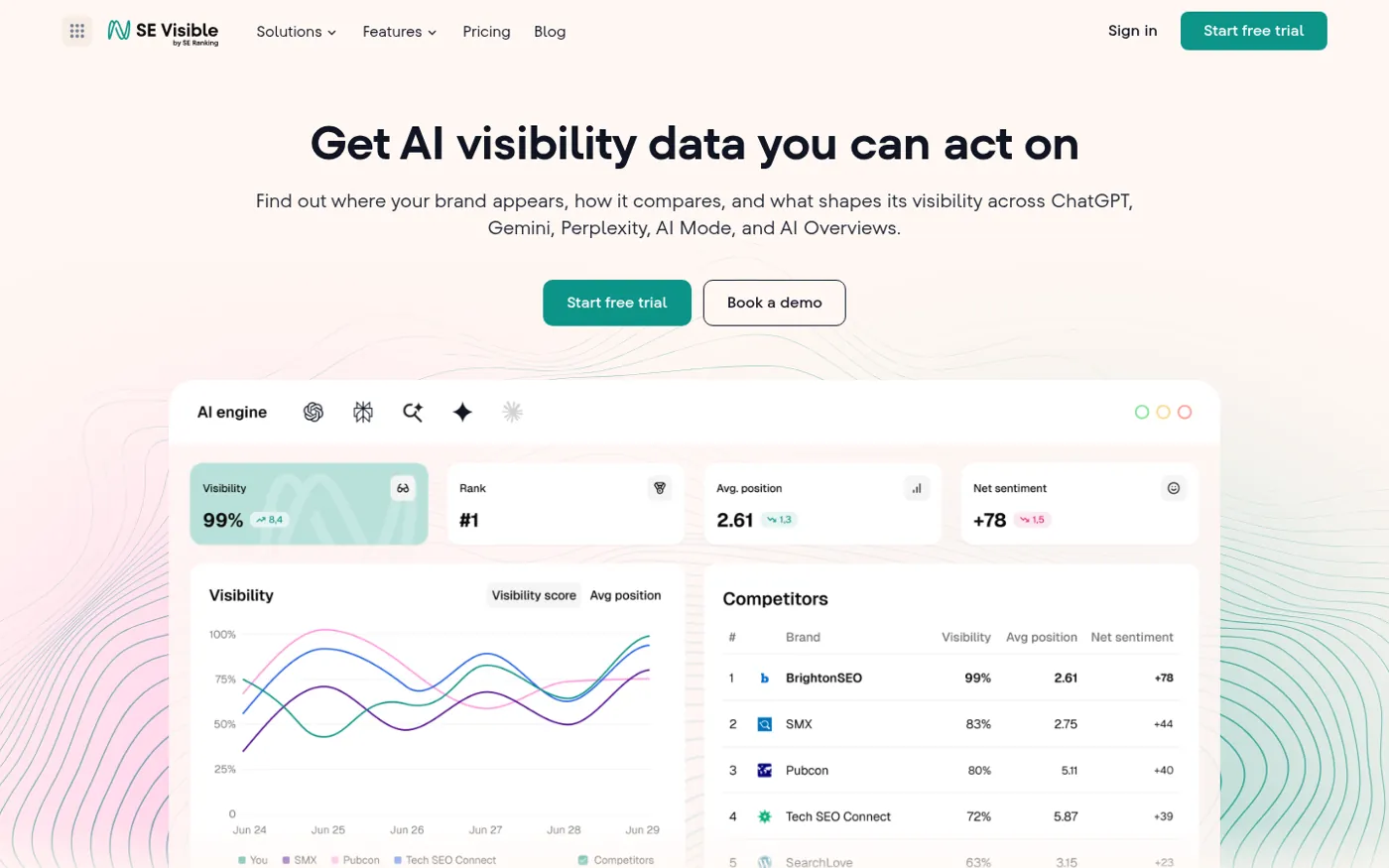
A shared drive of AI Mode screenshots, one per client per month, keeps one moment of each answer, not the pages behind it. SE Visible by SE Ranking is an AI visibility platform that reads each client’s AI Mode answer through the search data underneath. Cited domains carry traffic, DT, backlinks, and referring domains, and cited pages show traffic and whether they link to your client. The engine filter gives AI Mode its own trend line per client. Projects cover ChatGPT, Gemini, Google AI Mode, and Google AI Overviews in a country, or a specific city or region, daily by default.
Best for: Agencies scoping AI Mode into retainers across a client book.
Standout feature: In URLs, the Gap score and the “Is my brand mentioned?” filter surface cited pages that skip your client: where a source program starts. In Prompts, the AIO organic overlap column sets AI Overviews citations against organic results, so each gap’s SEO side shows too.
Pros:
- Separates clients into projects with client access
- Feeds agency dashboards via the API, Looker Studio, and MCP
- Keeps the unedited answer behind each number
Cons:
- Covers AI answers only; SE Ranking handles rank tracking and site audits
- Support for Claude and Copilot is planned
- No white label yet; in-app report building is still maturing
Pricing: Listed on visible.seranking.com; all tracked engines and API access on each plan, plus a free trial.
Client-book read: Built by the SE Ranking team, which has worked in search for over a decade, it brings that expertise to AI answers. You sell the source program on top: which cited pages to earn, fix, or pitch per client.
2. Peec AI
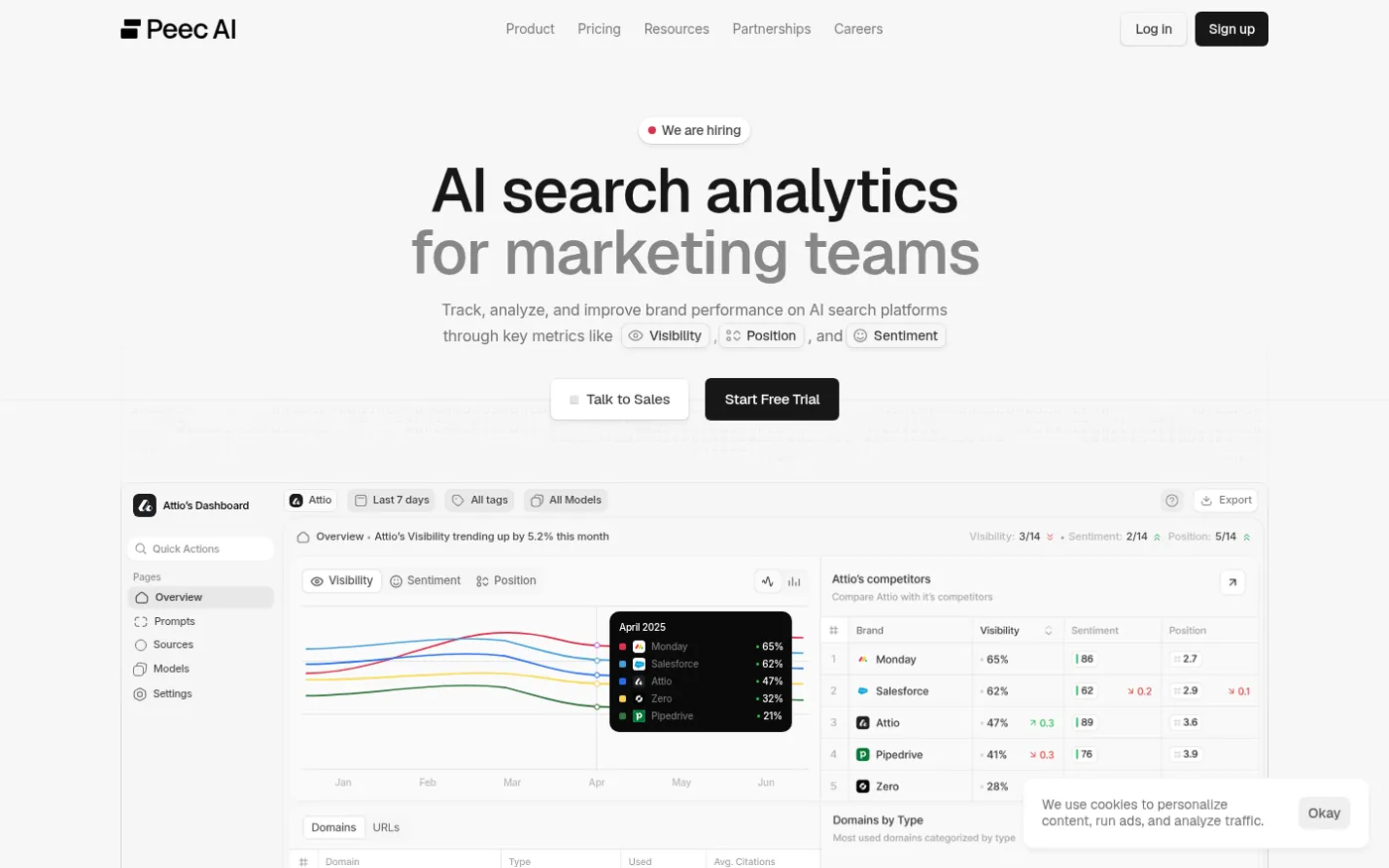
Below Enterprise, Peec AI tracks three models you choose, and Google AI Mode can fill one slot with daily runs.
Best for: Agencies choosing engines per client.
Standout feature: Each model gets its own visibility, source, and sentiment figures, so the readout’s AI Mode line rests on AI Mode answers rather than a blended average. You can tell a client whether AI Mode and ChatGPT agree about the brand.
Pros:
- Refreshes AI Mode daily on all three self-serve tiers
- Compares sentiment model by model
- Names the domains each model leans on
Cons:
- AI Overviews beside AI Mode leaves one free model below Enterprise
- Starter allows 1 project and 1 country, so a client book needs a higher tier
Pricing: Starter $95/mo for 50 prompts; Pro $245/mo; Advanced $495/mo.
Client-book read: Agree which three models matter for an account before the proposal goes out. When a second market or client joins, plan for Pro or Advanced and confirm their limits first.
3. Otterly.AI
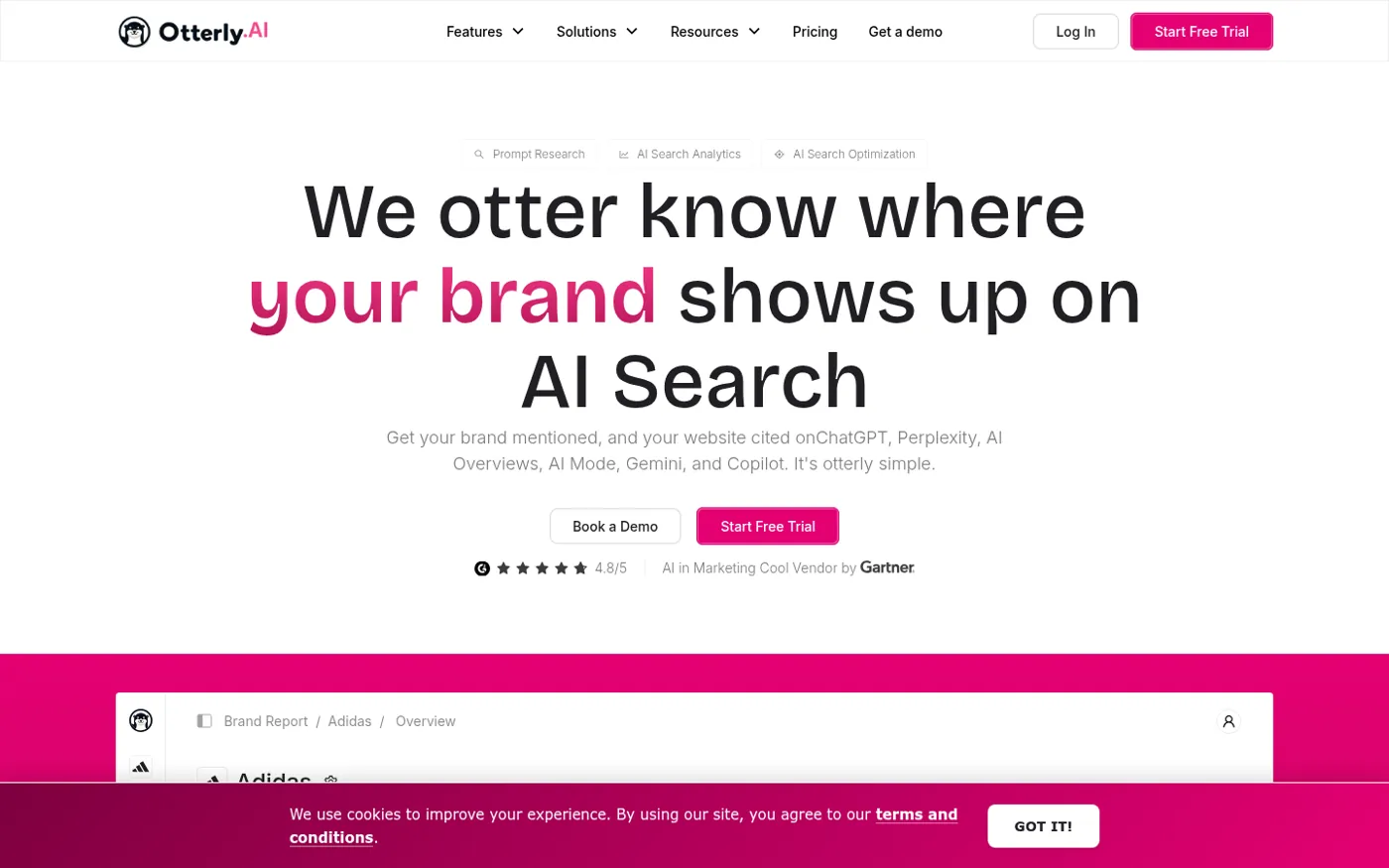
A client with a fixed prompt set fits Otterly.AI’s credit model, where each plan picks three of seven engines, Google AI Mode included.
Best for: Client accounts tracked on a fixed prompt set.
Standout feature: Share of voice, sentiment, visibility, and citation sources sit on Lite as well as the larger plans, so a narrow prompt set gets the same four readings as a wide one. On twenty prompts, that shows whether AI Mode names the brand and what it cites.
Pros:
- Puts share of voice on every plan, Lite included
- Opens Google AI Mode to any tier
- Tracks citation sources on Lite
Cons:
- Caps each plan below Enterprise at three engines
- Leaves API, MCP, and the Looker Studio connector off Lite
Pricing: Lite $29/month (20 prompts); Standard $189/month; Premium $489/month.
Client-book read: Fine for a retainer where AI Mode is one line and prompts rarely change. If the client wants the data in its own dashboard, plan for Standard before you promise it.
4. Rankscale
Rankscale puts Google AI Mode, AI Overviews, and Gemini on every plan, beside ChatGPT, Perplexity, DeepSeek, Mistral, Claude, and Copilot, with each answer check paid in credits.
Best for: Agencies that need white-label client dashboards.
Standout feature: From Growth up, dashboards go out under your agency’s brand, for clients who expect one look across deliverables. Regions are listed as “all”, so a multi-market client keeps its AI Mode checks in one account.
Pros:
- Lists AI Mode on Pro, Pro+, Growth, and Enterprise
- Covers a wide engine set for multi-assistant clients
- Opens every region, not a fixed country list
Cons:
- Every AI Mode check spends credits from the pool other engines use
- White label starts at Growth, not Pro
Pricing: Pro $99/mo ($84/mo yearly); Growth $385/mo ($327/mo yearly).
Client-book read: A fit when every deliverable must carry your agency’s brand. Estimate credits per client before scoping, since AI Mode prompts across several markets draw on one allowance.
5. Semrush AI Visibility Toolkit
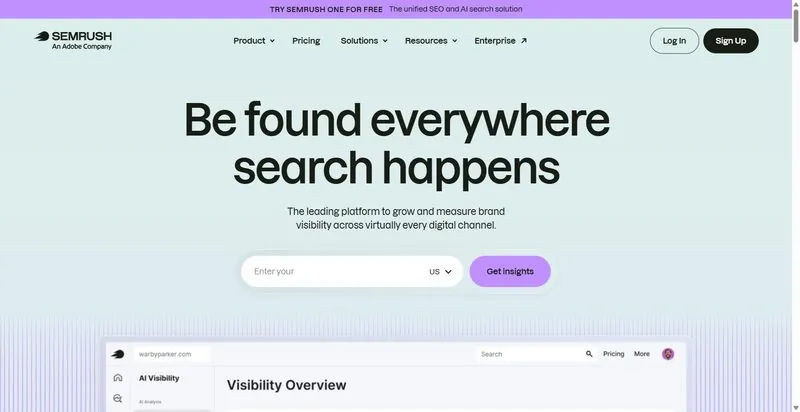
Semrush AI Visibility Toolkit adds daily AI Mode prompts per client domain inside a familiar suite.
Best for: Agencies whose client reporting already lives in Semrush.
Standout feature: Prompt Tracking runs 25 custom prompts a day in Google AI Mode, Gemini, and ChatGPT Search. For every prompt you get mentions, average position, and the domains and URLs the answer cited, with the client’s owned sources marked apart from third-party ones.
Pros:
- Shows AI Mode beside rankings
- Flags client-owned cited pages
- Avoids a new login
Cons:
- No share of voice or estimated traffic in Prompt Tracking
- Billed per client domain
Pricing: $99/mo per domain, billed annually.
Client-book read: Scope it for clients who already get Semrush numbers each month, so AI Mode becomes one new row rather than a new report. Competitive pitches are harder: without share of voice, your team has to build every rival comparison by hand.
6. Nightwatch
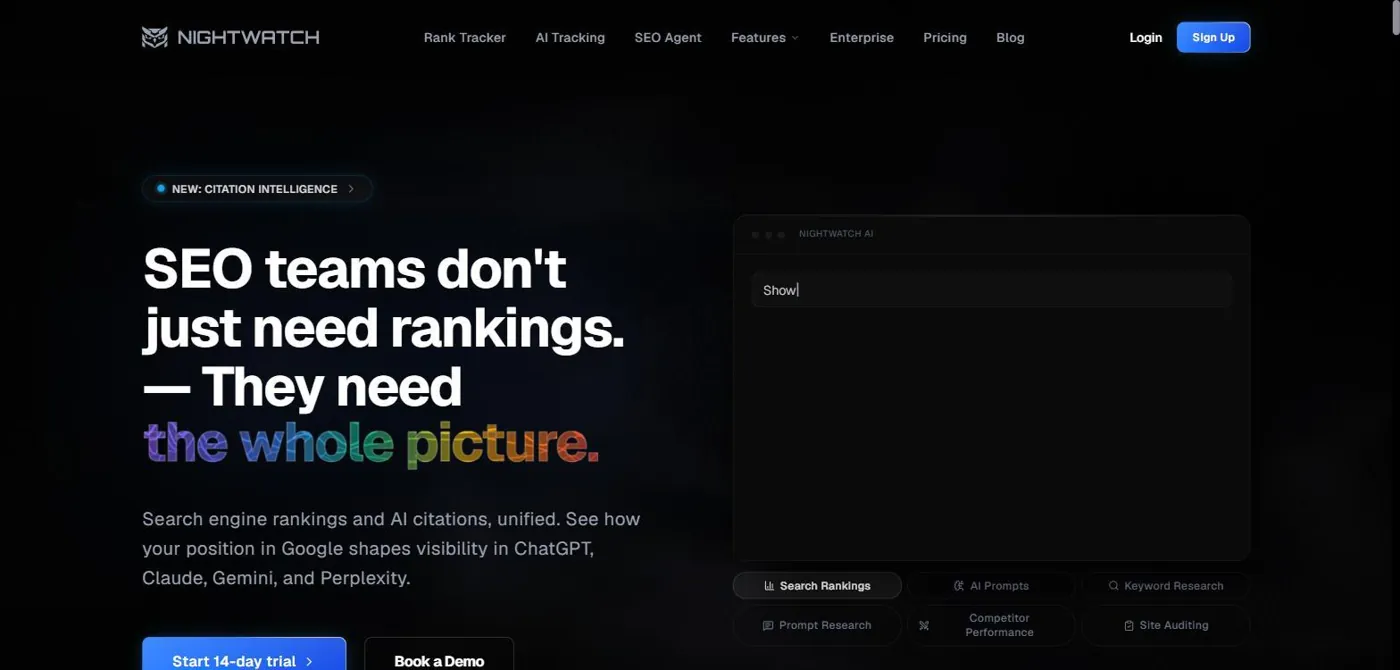
Keywords and AI prompts share one Nightwatch plan, so AI Mode arrives with your rank data.
Best for: Agencies reporting AI Mode beside Google rankings.
Standout feature: Every plan tracks AI prompts daily, in any location or language, with AI Mode beside ChatGPT, Gemini, Perplexity, and AI Overviews. Starter pairs 500 keywords with 50 AI prompts, so one account is an AI rank tracking tool and an SEO rank tracker.
Pros:
- Tracks AI Mode on every plan
- Includes Bing rankings
- Adds Claude on Enterprise
Cons:
- Starter’s 50 AI prompts run tight
- White label starts at Professional
- API and Looker Studio need Professional
Pricing: Starter €79/mo; Professional €159/mo; Agency €399/mo.
Client-book read: Easy to scope when the client already buys rankings from you: AI Mode is one more section in a report they already know. Client-branded reports mean Professional, so put that tier in the proposal, not in the first change order.
7. Ahrefs Brand Radar
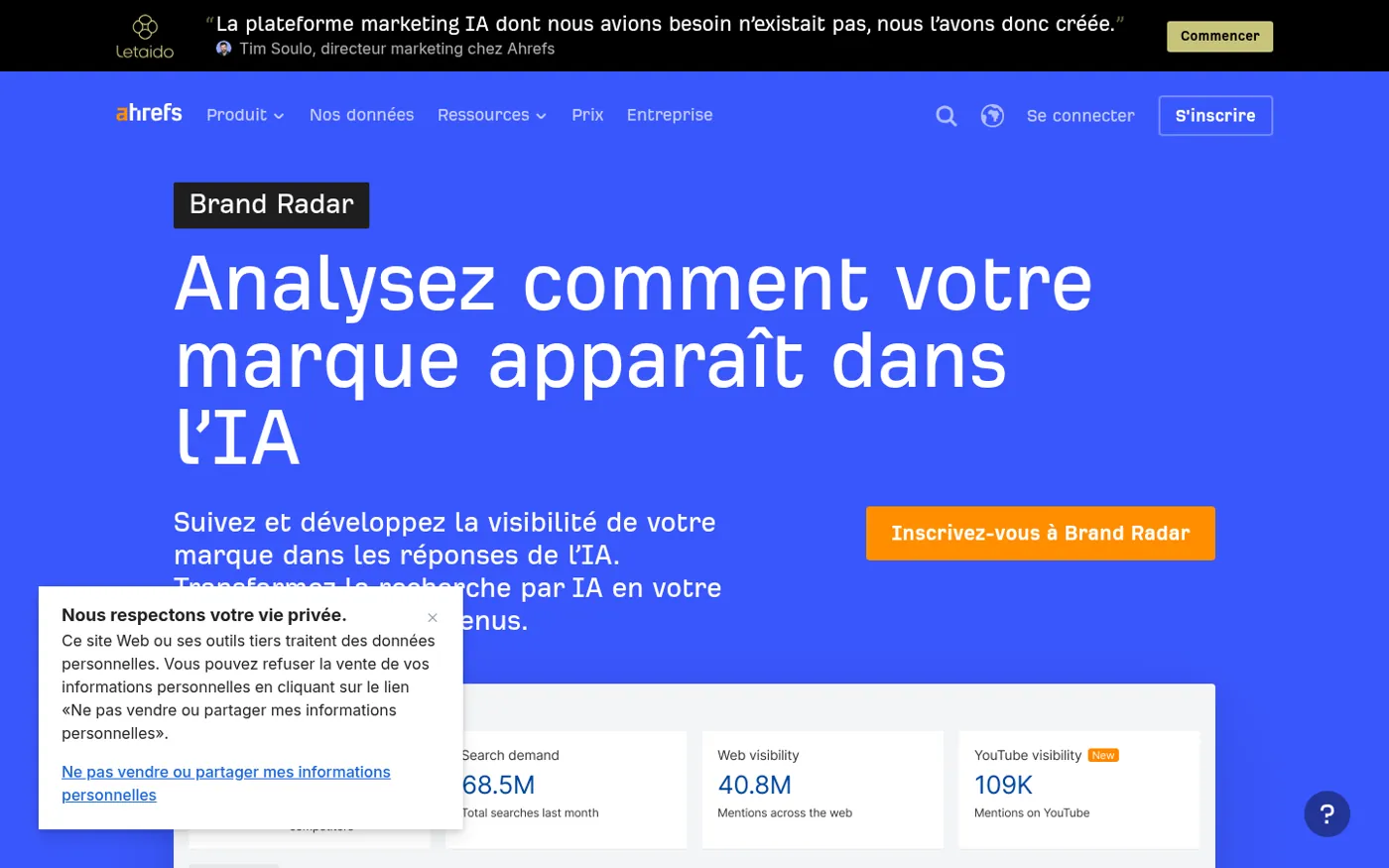
Ahrefs Brand Radar is market research first: a prompt index you can query for any brand.
Best for: Pitch research on a prospect’s market before a retainer exists.
Standout feature: Its index of more than 572 million prompts spans AI Overviews and AI Mode, plus ChatGPT, Perplexity, Gemini, and Copilot. You can show where AI Mode names the prospect and its rivals in the first meeting, then run custom prompts daily, weekly, or monthly.
Pros:
- Sizes AI Mode presence without setup
- Sets per-platform cadence
- Adds Claude in Custom Prompts
Cons:
- Monthly 90-day re-tests show recent moves late
- Low-search-volume clients barely register
Pricing: From $199/mo; $699/mo for all models.
Client-book read: Budget it as a new-business cost, not a delivery line. It earns its keep in the pitch deck, where the prospect sees its AI Mode position against named rivals. After signature, the monthly readout runs on the client’s own prompts.
8. Profound
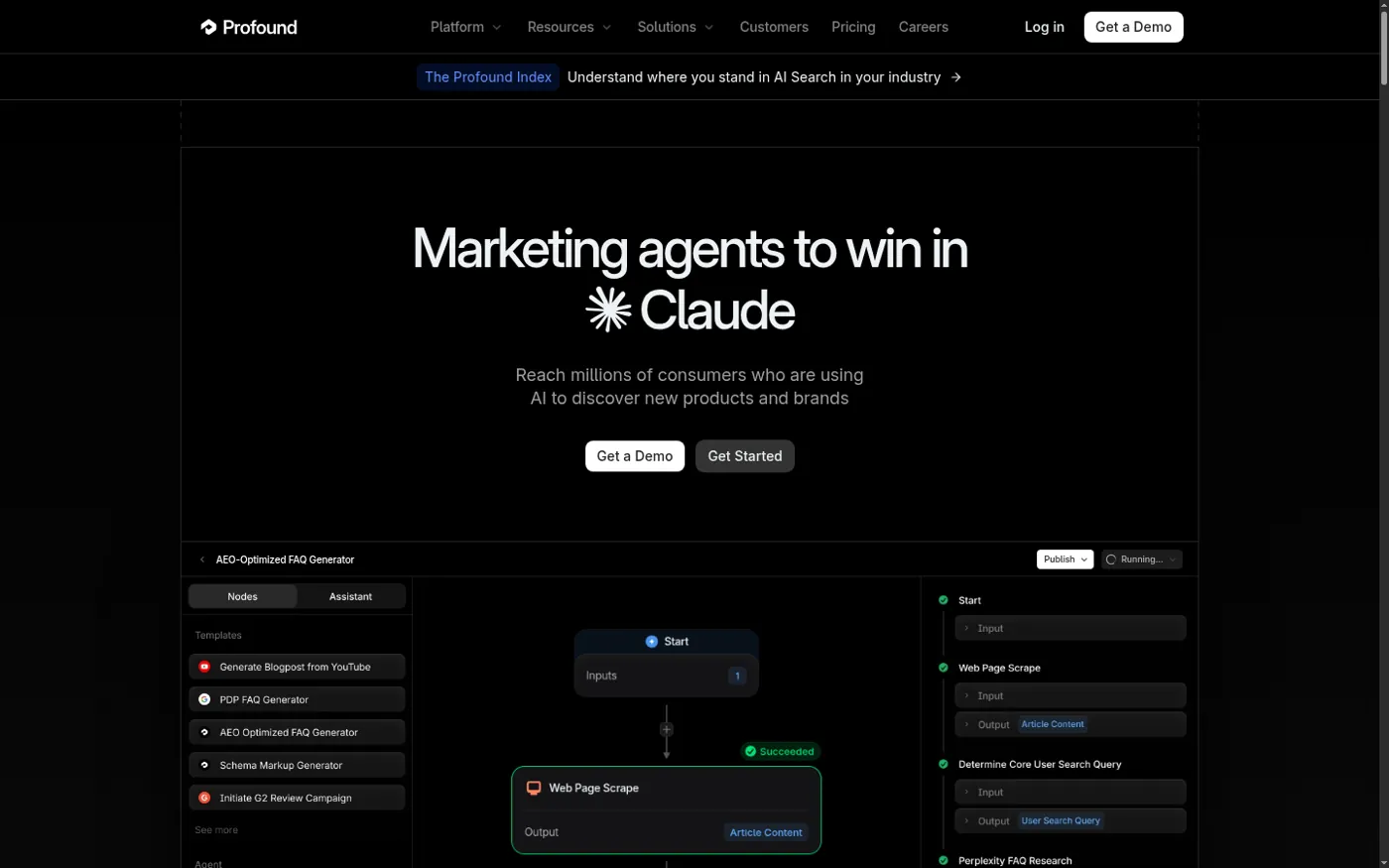
Profound sells AI Mode tracking inside an enterprise contract, making it a per-account decision, not an agency default.
Best for: Enterprise client accounts with procurement.
Standout feature: The Enterprise plan runs AI Mode daily among as many as 10 answer engines, Claude, Perplexity, and DeepSeek included. Exports and an API move the data into the client’s own reporting stack, and SSO keeps every sign-in under the company’s access rules.
Pros:
- Runs AI Mode daily inside a wide engine set
- Feeds client reporting through the API
- Supports SSO
Cons:
- The 7-day trial skips AI Mode
- No published price for the AI Mode plan
Pricing: Free trial; Enterprise custom.
Client-book read: Use it when the client signs the Profound contract and your agency runs the program on top. As a default across mid-size accounts it’s harder to scope, because the plan that includes AI Mode has no published price.
Which AI Mode tracking tool fits which agency setup?
If you sell the source program behind AI Mode, start with SE Visible. If the AI Mode line has to sit next to rank reports a client already reads, Semrush AI Visibility Toolkit or Nightwatch fits. Rankscale suits clients who expect a white-label dashboard, and Peec AI fits engine choice per client, Otterly.AI a fixed prompt set.
Nobody buys a dashboard. They buy a decision. We sold the number first, and clients asked what next. AI Mode tracking earns its retainer line only when it ends in one.
Run one client’s AI Mode prompts through SE Visible and see what the next readout can show. SE Ranking covers the SEO side, and together the two platforms give a fuller picture of each client’s search performance.
AI Mode tracking FAQ for agency owners
Can clients see their AI Mode tracking data themselves?
Client access to AI Mode tracking data depends on the plan, so check before promising it. SE Visible offers client access plus Looker Studio and API exports, but no white label. Rankscale adds white label from Growth, Nightwatch from Professional.
Does Google AI Mode tracking work in every country?
Not always. AI Mode availability differs by country, and a tracking tool only reports markets where it runs prompts. Before you scope a retainer, confirm the tool tracks the client’s country, or the city or region where it sells.
Should AI Mode be billed as a separate retainer line?
Yes, when the deliverable is the source program behind AI Mode answers, not a visibility number. Scope the line by prompt set, markets, and the action each readout triggers, like a page update or outreach target. Numbers alone rarely renew.
Product details, prices and features are checked at the time of writing and can change. Sources are linked in the text so you can check them yourself.
How does your brand appear in AI answers?
We test the questions your buyers ask across the major AI assistants and search engines, then show you what to fix first.
Get an AI Visibility Audit