GEO vs AEO: What Is the Difference and Which Do You Need?
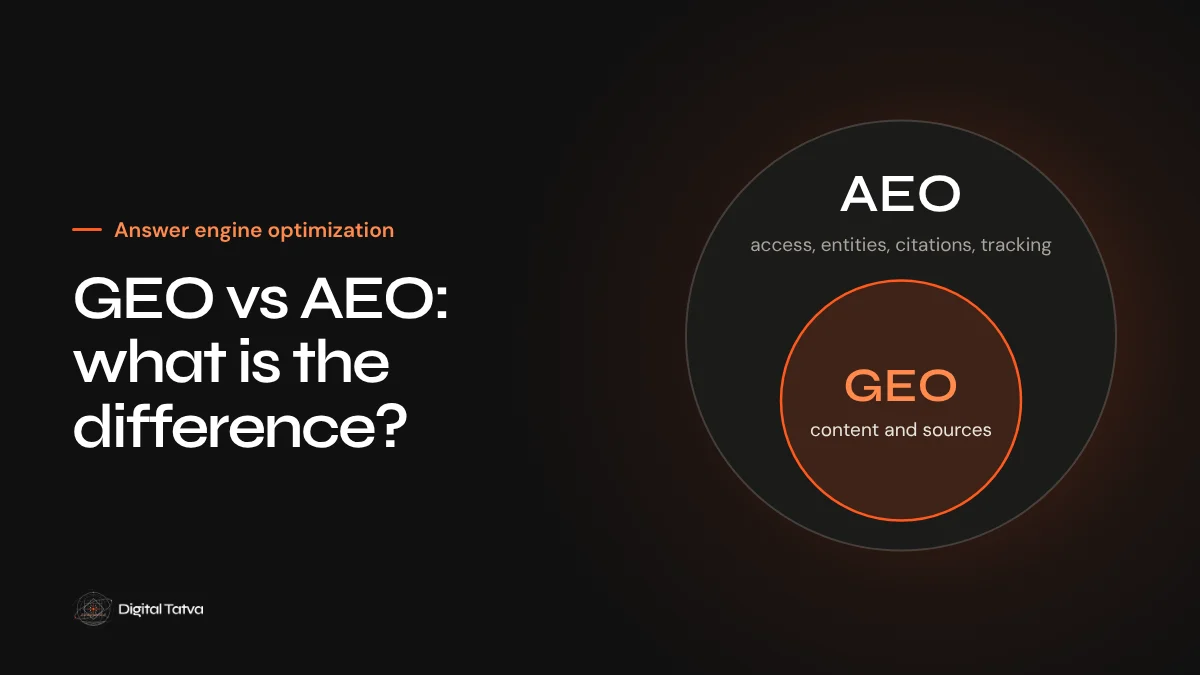
GEO and AEO are two names for overlapping work. AEO is about being the answer; GEO is about shaping the sources generative AI writes from. Here is how they differ in practice.
On this page
Last updated: 30 October 2026
Quick answer: AEO (answer engine optimization) is the wider practice of getting your brand into the answers that ChatGPT, Gemini, Perplexity, Copilot and Google AI Overviews give. GEO (generative engine optimization) focuses on one part of it: shaping the content and sources that generative models summarise, so your facts and point of view appear in the synthesis. Most brands need both, run as one programme.
The terms are often used as if they mean the same thing, and in many agency pitches they do. The useful distinction is what you work on. AEO covers everything that decides whether an engine can find, trust and name you. GEO is the content side of that: how you write and where you publish so a model chooses your material when it composes a long answer.
Key takeaways
- AEO is the umbrella: technical access, entities, content, citations and measurement.
- GEO is the content and source layer inside it.
- The term GEO comes from a 2023 Princeton-led research paper on optimising for generative engines.
- Adding citations, quotations and statistics improved visibility in that study.
- Plan one programme and measure both mentions and citations.
Where the terms come from
Answer engine optimization grew out of featured snippets and voice search, when the goal was to be the single answer Google or Alexa read out. Generative engine optimization was named in a 2023 paper by researchers from Princeton and collaborators, which tested how content changes affect visibility in AI-generated answers. Its best-performing methods included citing sources, adding quotations and adding statistics, with visibility gains of up to around 40% in their tests.
AEO and GEO side by side
| AEO | GEO | |
|---|---|---|
| Main goal | Be named and cited in AI answers | Be part of what the AI summarises |
| Typical questions | Short, factual, high intent | Long, comparative, open-ended |
| Main levers | Crawl access, entity data, answer-first pages, citations, tracking | Evidence-rich content, source coverage, third-party mentions |
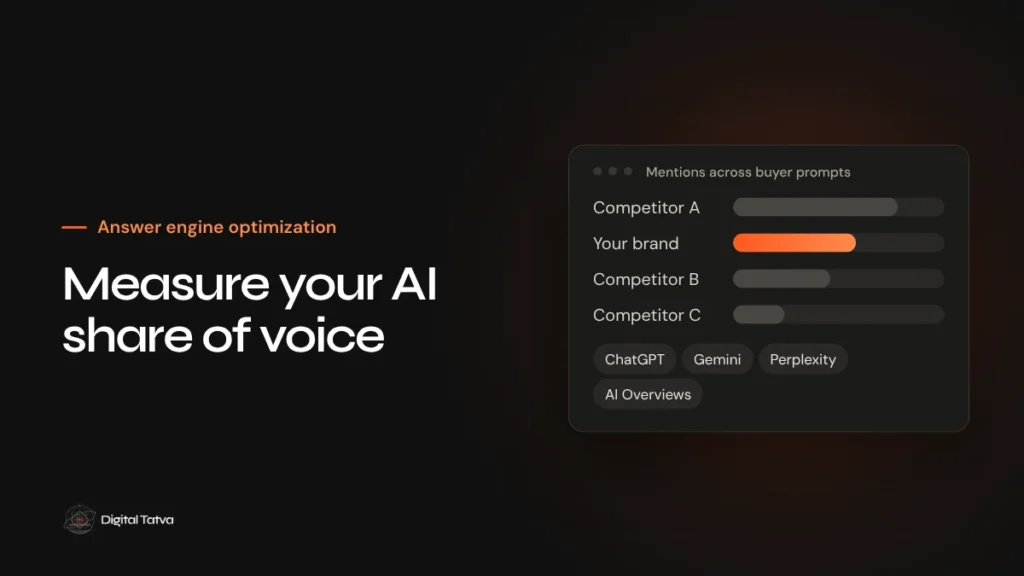
| Measured by | Share of prompts where you are mentioned or cited | How accurately and favourably answers reflect your material |
| Digital Tatva service | Answer Engine Optimization | Generative Engine Optimization |
What GEO work looks like in practice
- Map the sources. For your priority prompts, list the pages and domains engines cite today.
- Add evidence to your own pages. Specific numbers, named examples, quotes from experts and links to primary sources.
- Cover the comparison questions. “X vs Y”, “best X for Y” and “alternatives to X” pages are heavily used in long answers. See our guide to comparison pages for AEO.
- Appear in other people’s content. Reviews, roundups, podcasts and industry reports that engines already trust.
- Compare answers before and after. Re-run the same prompts and check whether your facts now appear.
Which should you start with?
If AI engines cannot reach or identify you, start with AEO foundations: crawler access, rendering and a consistent entity description. If they already know who you are but describe you vaguely or prefer competitors in long answers, GEO is where the next gains are. Most businesses we audit need a little of both, in that order.
How the two fit into one programme
In our work, AEO and GEO share the same first steps and the same measurement. The difference is where the effort goes in the middle.
- Research, shared. Build one prompt set from real buyer questions, grouped by intent.
- Baseline, shared. Record where you are mentioned, how you are described and which sources are cited, across each engine.
- AEO foundations. Crawler access, rendering, structured data and a consistent brand description, so engines can reach and identify you.
- GEO content and sources. Evidence-rich pages, comparison content and mentions on the domains engines already cite.
- Measurement, shared. Re-run the same prompts monthly and report changes by engine and prompt group.
Signs you need more GEO work
- AI engines know your name but describe you in generic terms.
- You appear in short factual answers but disappear from “best” and comparison answers.
- Answers cite affiliate or competitor pages when talking about your category.
- Your key facts, such as prices or specialisms, are missing or wrong in long answers.
Signs you need more AEO foundations
- Engines confuse you with another company, or do not recognise you at all.
- Your pages are rarely cited, even for questions about your own brand.
- Your site is built on a JavaScript framework and key content is not in the HTML.
- Your business details differ across your website and profiles.
Not sure where your gaps are? Request an AI visibility audit.
Frequently asked questions
Is GEO replacing SEO?
No. Generative engines still rely on pages that search crawlers can find. GEO and AEO build on SEO rather than replacing it.
Is LLMO the same as GEO?
Large language model optimization (LLMO) is another name for broadly the same content work. The labels differ more than the tasks.
Can I measure GEO separately?
Partly. Track whether your specific facts, figures and phrases appear in answers, alongside simple mention rates.
Do I need two agencies for AEO and GEO?
No. They share the same research, prompts and measurement. Running them separately usually duplicates effort.
Sources
- GEO: Generative Engine Optimization, Aggarwal et al., arXiv, 2023
- AI features and your website, Google Search Central
Product details, prices and features are checked at the time of writing and can change. Sources are linked in the text so you can check them yourself.
How does your brand appear in AI answers?
We test the questions your buyers ask across the major AI assistants and search engines, then show you what to fix first.
Get an AI Visibility Audit